Bronze Sculpture: The Complete Guide to Cast Bronze Art for Gardens, Estates and Public Spaces
Bronze sculpture is among the oldest and most enduring of art forms, and it remains the material of choice for outdoor sculpture, garden statues, monumental public art and fine interior pieces. This guide covers everything worth knowing about bronze sculpture in the UK and internationally: the types, how cast bronze is made, why it lasts, how patina works, how to commission a piece, what it costs, and how to care for it.
Quick answer: A bronze sculpture is a three-dimensional artwork cast in bronze, an alloy of copper and tin, prized for its strength, fine detail and the patina it develops over time. Bronze suits gardens, estates, public realm, corporate and hospitality settings, and interiors, and a well-made piece lasts for generations.
What is a bronze sculpture?
A bronze sculpture is an artwork cast in bronze using a foundry process, most often lost-wax casting. Bronze combines the strength to hold large-scale form with the fineness to capture delicate detail, which is why sculptors have used it for thousands of years. Cast bronze sculpture can be figurative or abstract, small collector pieces or monumental public works, and it performs equally well as indoor and outdoor sculpture.
Types of bronze sculpture
Bronze is remarkably versatile. The most sought-after categories of bronze sculpture include:
- Bronze garden sculpture – statues and forms designed as a focal point in a garden, courtyard or estate landscape.
- Outdoor bronze sculpture – weather-resistant pieces for terraces, grounds, parks and public spaces.
- Large and monumental bronze sculpture – statement and landmark works at architectural scale.
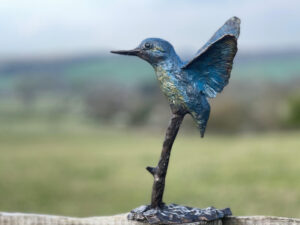
- Bronze wildlife and animal sculpture – stags, hares, birds and other British wildlife captured in lifelike or stylised form.
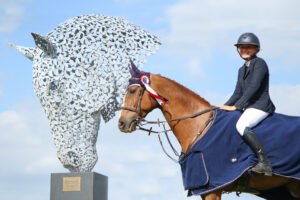
- Bronze horse and equestrian sculpture – one of the most enduring subjects, from horse-head studies to full-scale horses.
- Figurative bronze sculpture – the human form, portrait and figure work.
- Abstract and contemporary bronze sculpture – modern forms for contemporary architecture and interiors.
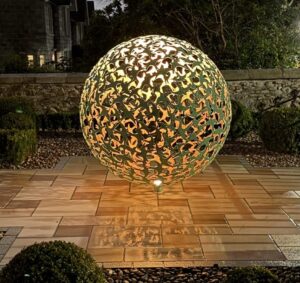
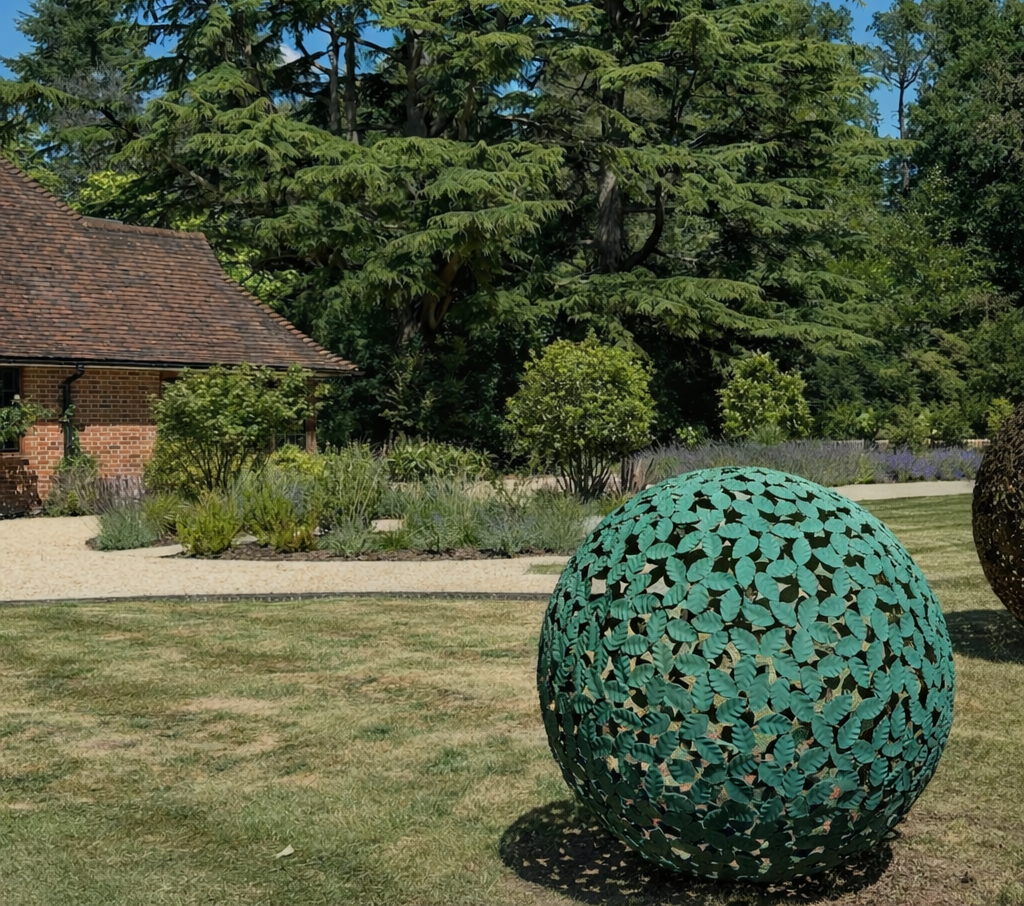
- Bronze sphere sculpture – a timeless geometric form for modern gardens and public realm.
- Bronze public art – civic, commercial and development commissions that anchor a place.
- Interior bronze sculpture – refined pieces for homes, hotels, corporate and hospitality spaces.
Whatever the subject, the material advantages of bronze remain the same, which we explore in why bronze is the ultimate material for large-scale sculpture.
How bronze sculpture is made: lost-wax casting
Most fine bronze sculpture is produced by lost-wax casting (cire perdue), a foundry process refined over millennia. In short: the sculptor creates an original, a mould is taken, a wax copy is made and then encased, the wax is melted out, and molten bronze is poured into the cavity. The raw casting is then fettled, assembled, chased and finished. The result is a durable, detailed cast bronze sculpture ready for patination.
This combination of craft and engineering is what allows bronze to hold both monumental scale and fine surface detail, and it is why cast bronze sculpture carries a value and permanence that cast resin or reconstituted stone cannot match.
Bronze patina: colour, protection and character
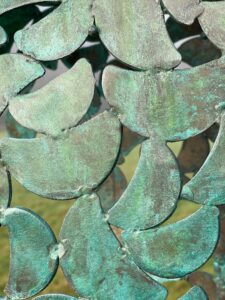
One of bronze’s defining qualities is its patina, the surface finish developed through heat and chemistry at the foundry, and refined further by the elements over time. Patina is not merely decorative; it bonds with the metal, protects it, and gives each piece its character, from deep aged-bronze browns to green verdigris tones. A bronze sculpture is therefore never entirely static: the form stays fixed while the surface matures. We explain the options in aged bronze and verdigris finishes.
Why choose bronze sculpture?
Bronze endures where other materials fail. It offers exceptional durability and weather resistance for outdoor sculpture, a protective patina that improves with age, the strength to support large-scale and monumental work without losing detail, and a permanence that makes it a genuine long-term investment. For gardens, estates, developments and public spaces alike, bronze reads as quality and lasts for generations.
Considering a bronze commission? We create bronze sculpture for gardens, estates, developments and public spaces, delivered end to end. Talk to our studio.
Bronze sculpture for gardens and estates
In a garden or estate, a bronze sculpture becomes a focal point that anchors a view, marks an axis or sits in quiet dialogue with planting. Scale is everything: a large bronze garden sculpture must hold presence in open space without overwhelming it. Bronze suits both traditional and contemporary landscapes, from classical figures to modern abstract and sphere forms. For more on choosing and placing pieces outdoors, see bronze sculpture for gardens and public spaces.
Bronze public art and commercial commissions
For developers, architects and councils, bronze public art contributes directly to placemaking, giving a development identity, a landmark and a name. Bronze is frequently the material of choice for commissions secured through planning, including public art funded via Section 106 obligations. Its durability withstands heavy public interaction while its patina registers the passing of time. If you are budgeting a scheme, see how much public art costs.
Commissioning a bronze sculpture
Commissioning a bespoke bronze sculpture follows a clear path: understanding the site, agreeing a brief, developing the design through sketches and maquettes, casting and finishing, and installation. For architectural and public projects, engineering and delivery are as important as the art itself. Our full process is set out in commissioning a sculpture.
How much does a bronze sculpture cost?
Bronze sculpture prices vary widely with scale, complexity, casting and finish. Smaller collector and garden pieces sit at the lower end, while large and monumental commissions run considerably higher once foundry work, engineering and installation are included. For public art with a set budget, we explain how the figure is calculated in our cost guide. For private commissions, we advise on what a given budget can achieve.
Caring for a bronze sculpture
Bronze needs very little maintenance. Occasional cleaning with water and a mild soap, and a coat of conservation wax once or twice a year, keep an outdoor bronze sculpture at its best for decades. Full guidance is in caring for your bronze sculpture.
British bronze sculpture, at home and internationally
There is a long and respected tradition of British bronze sculpture, and demand for British sculptors extends worldwide, across private estates, luxury homes, hotels, corporate spaces and public commissions. Working from the Chiltern Hills, Charles Elliott creates handcrafted bronze sculpture for clients in the UK and internationally, combining traditional craftsmanship with contemporary design.
Explore and commission
Whether you are looking for a bronze garden sculpture, a bronze wildlife or horse sculpture, a contemporary sphere, or a monumental bronze public artwork, every piece is created with longevity in mind and delivered as a considered, end-to-end service.
Discuss a trade or public commission | Make a private commission enquiry
Frequently asked questions
What is a bronze sculpture made of? Bronze is an alloy of copper and tin. Bronze sculpture is cast in a foundry, usually by the lost-wax process, then finished and patinated.
Is bronze good for outdoor sculpture? Yes. Bronze is one of the most durable materials for outdoor sculpture, resisting weather and developing a protective patina over time, which is why it is used for garden statues and public monuments alike.
How long does a bronze sculpture last? Properly made and maintained, a bronze sculpture lasts for generations, often centuries. Its patina protects the metal and matures rather than degrades.
How much does a bronze sculpture cost in the UK? Prices range from a few hundred pounds for small pieces to substantial six-figure sums for large commissioned and monumental work, depending on scale, casting and finish.
Can I commission a bespoke bronze sculpture? Yes. We create bespoke bronze sculpture for gardens, estates, developments and public spaces, guiding you from concept and maquette through casting to installation.
How do I care for a bronze sculpture? Clean gently with water and mild soap, avoid abrasives and pressure washers, and apply a conservation wax once or twice a year. See our full care guide.
What is bronze patina? Patina is the surface finish of a bronze sculpture, created at the foundry and developed by exposure over time. It protects the metal and gives each piece its colour and character.
Written by Charles Elliott, founder and sculptor. To commission a bronze sculpture, contact the studio.
Thinking about a bronze sculpture of your own?
Every piece leaves one studio. Designed, cast or hand-fabricated in silicon bronze, patinated and installed by the people who made it. Work ranges from tabletop pieces to landmark sculpture at fifteen metres and beyond.
See how a bronze sculpture is made, what it costs and how long it takes on our bronze sculpture page.
Explore bronze sculptureBook a call with CharlesOr speak to the studio on +44 (0) 1494 758 896