A Shift in How Space Is Designed
In the most refined environments, space is no longer filled — it is shaped.
Across private estates, contemporary architecture, and large-scale developments, there has been a clear shift in how outdoor and interior spaces are approached. Rather than relying solely on planting or built form, designers increasingly turn to large-scale sculpture to introduce structure, identity, and permanence.
This shift reflects a broader understanding: that sculpture is not an addition, but a defining element of space itself.
Beyond Decoration
At the highest level, sculpture is not decorative.
It is used to:
- Establish hierarchy within a landscape
- Anchor key viewpoints
- Create moments of stillness within open space
- Introduce contrast between natural and architectural elements
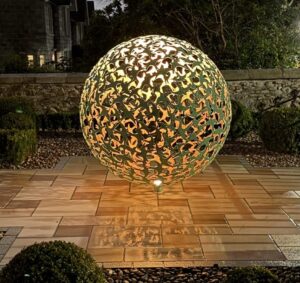
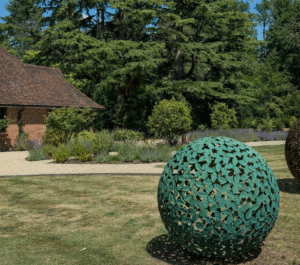
A large bronze or steel sculpture carries weight — both visually and physically — allowing it to hold its position within even the most expansive environments.
Material as a Statement
Material selection plays a central role in how sculpture is perceived.
In luxury settings, two materials continue to define contemporary practice:
Bronze
- Associated with heritage and permanence
- Capable of capturing detail and movement
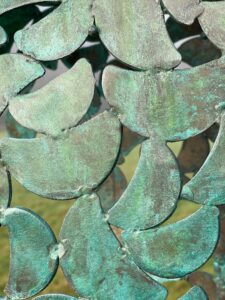
- Develops a natural patina over time
Oxidised Steel
- Architectural and modern in character
- Often referenced alongside corten-style finishes
- Offers clarity, structure, and scale
Together, these materials represent the balance between tradition and contemporary design.
Sculpture and Architecture
Increasingly, sculpture is considered alongside architecture from the outset.
Rather than being introduced after completion, it is used to:
- Reinforce spatial intent
- Balance built form
- Create focal points within structured environments
This is particularly evident in:
- High-end residential projects
- Commercial developments
- Landscape architecture schemes
In these contexts, sculpture becomes part of the design language — not separate from it.
The Importance of Scale
Scale defines success.
A sculpture must operate within its environment — responding to:
- Distance
- Proportion
- Surrounding elements
In larger landscapes, this often leads to the use of large-scale sculpture, capable of holding presence across long sightlines.
A piece that is too small disappears.
A piece that is correctly scaled becomes integral.
Creating Identity Through Sculpture
In both private and commercial settings, sculpture is increasingly used to define identity.
It can:
- Mark the entrance to an estate
- Establish a recognisable feature within a development
- Reflect the character of a property or brand
For developers and architects, this has clear value — creating environments that are both distinctive and memorable.
A Permanent Element in a Changing Environment
Landscapes evolve.
Planting matures, seasons shift, and architecture weathers over time.
Sculpture offers a counterpoint — a fixed presence within a changing environment.
A bronze or steel sculpture becomes:
- A constant reference point
- A long-term feature within the space
- A piece that gains meaning over time
This permanence is one of its defining qualities.
Contemporary Sculpture and the Countryside
Within rural and estate settings, sculpture often reflects its environment.
Subjects such as:
- Equestrian forms
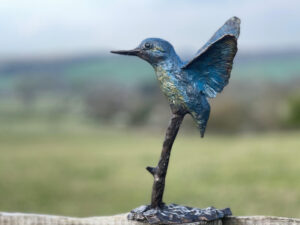
- Wildlife
- Organic or natural structures
Allow the work to connect directly to the landscape.
A bronze horse sculpture, for example, introduces movement and narrative while remaining rooted in its surroundings.
Commissioning for Space
The most successful sculptures are those created for a specific setting.
A bespoke sculpture commission allows for:
- Precise control of scale
- Considered placement
- Alignment with architecture and landscape
This approach ensures that the sculpture does not feel introduced — but inherent to the space.
A Defining Element of Luxury
At the highest level, luxury is defined not by quantity, but by intention.
Sculpture embodies this principle.
It is:
- Considered
- Permanent
- Crafted
Whether in bronze or steel, a well-placed sculpture introduces a level of refinement that few other elements can achieve.
Final Thoughts
Sculpture has moved beyond its traditional role.
It now operates as a defining feature within contemporary space — shaping how environments are experienced, understood, and remembered.
For those creating landscapes, architecture, and developments at the highest level, sculpture is no longer optional.
It is essential.
Enquire About Sculpture
We create large-scale bronze and steel sculpture for private estates, architectural projects, and public spaces worldwide.
Each piece is developed in response to its environment — ensuring it holds presence, balance, and longevity.