Where Art Becomes Part of the Property
In high-end homes, art is not added — it is integrated.
It sits within the architecture, responds to the space, and becomes part of how the property is experienced. Sculpture, in particular, holds a unique position. Unlike paintings or decorative objects, it occupies space fully — shaping how rooms and landscapes are perceived.
A large-scale sculpture, whether placed indoors or outdoors, becomes a defining element of the home itself.
Interior vs Exterior — A Connected Approach
Rather than treating interior and exterior separately, many projects now consider them together.
A sculpture placed within a garden may be visible from inside.
An interior piece may reflect themes found outdoors.
This creates continuity — allowing the property to feel cohesive rather than divided.
In this context, bronze and steel sculpture can move seamlessly between environments.
Sculpture Within Interior Spaces
Inside the home, sculpture often replaces more conventional focal points.
It may be positioned:
— within entrance halls
— at the centre of staircases
— within double-height spaces
— as a defining element in open-plan living areas
A bronze sculpture in these settings introduces:
- warmth
- depth
- material richness
It provides contrast to modern finishes such as glass, stone, and polished surfaces.
Scale Within Interiors
Interior sculpture is often underestimated in scale.
In high-end properties, rooms are:
- larger
- taller
- more open
This allows for:
👉 larger, more impactful sculpture
A piece that works in a standard home may feel lost in a luxury property.
Correct scale ensures:
- presence
- balance
- proportion
Sculpture in Exterior Spaces
Outside, sculpture operates differently.
It must:
- hold presence across distance
- respond to landscape and planting
- withstand environmental conditions
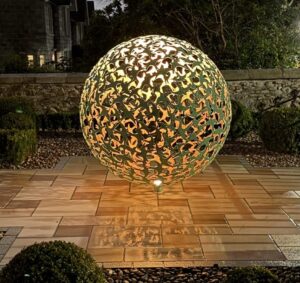
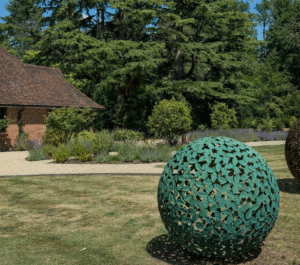
A large garden sculpture can:
- anchor an open lawn
- define a courtyard
- create a focal point within the landscape
In these environments, sculpture becomes part of the overall design of the property.
Material Choices for Luxury Homes
Material selection defines how sculpture interacts with both interior and exterior spaces.
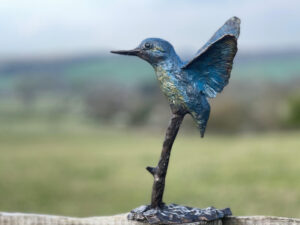
Bronze
— suited to both indoor and outdoor use
— develops richness over time
— ideal for detailed or figurative work
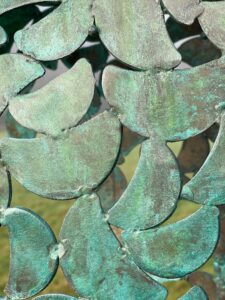
Steel & Oxidised Steel
— more architectural
— works strongly in modern environments
— provides structure and clarity
The combination of these materials allows sculpture to complement a wide range of architectural styles.
Creating a Focal Point
In both interiors and exteriors, sculpture is often used to create a point of focus.
Rather than multiple competing elements, a single statement sculpture can:
- simplify the space
- draw attention
- define the overall composition
This approach is common in luxury design, where restraint is valued over excess.
Reflecting Lifestyle and Identity
Sculpture within a home often reflects the owner.
This may include:
- Equestrian subjects for horse owners
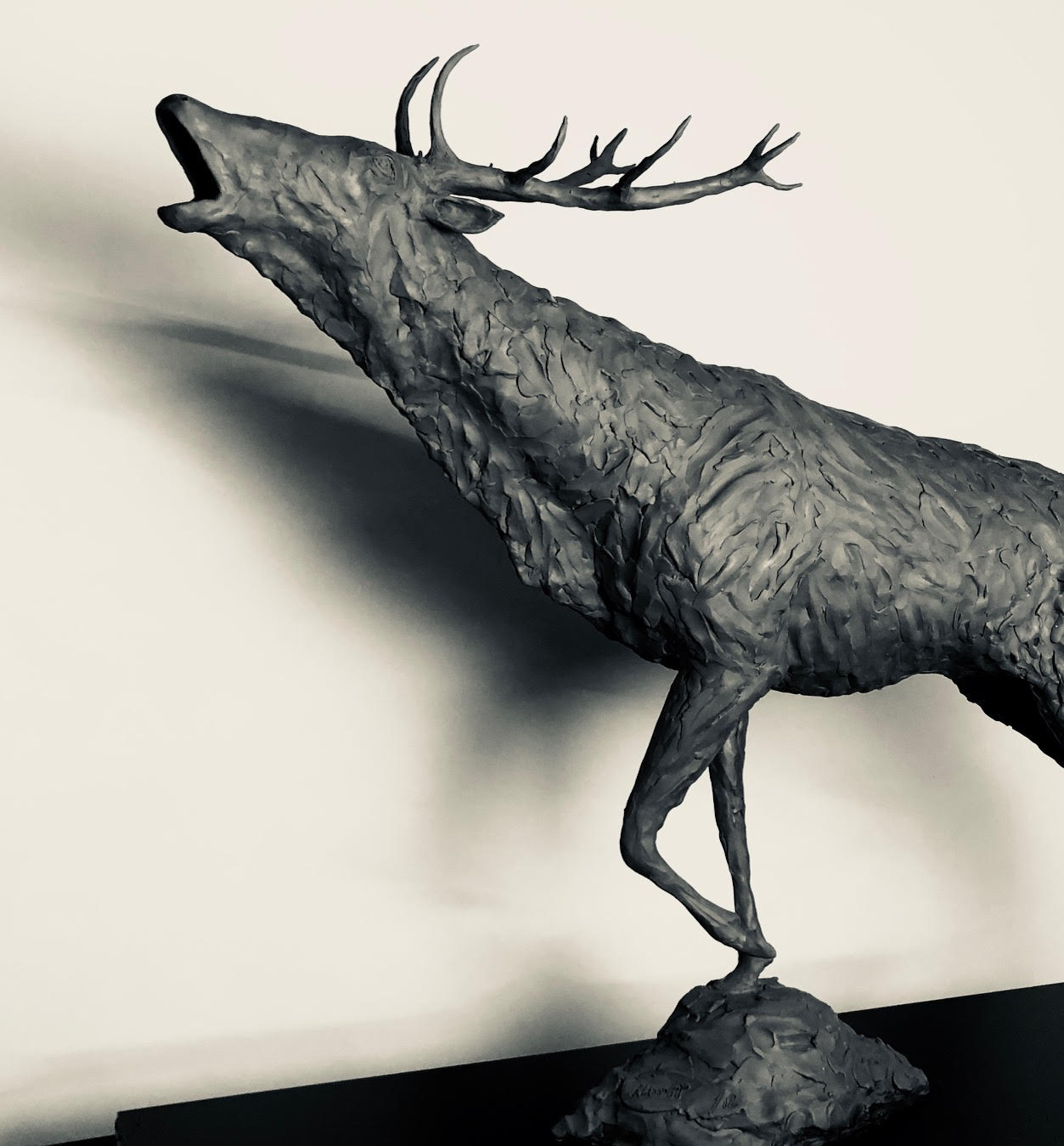
- Wildlife for countryside properties
- Abstract forms for contemporary homes
A bespoke sculpture allows for this connection to be fully realised — creating something that is both personal and permanent.
Commissioning for a Property
When sculpture is commissioned specifically for a home, it becomes fully integrated into the design.
This allows for:
— precise scale
— considered placement
— alignment with architecture
The result is a piece that feels as though it belongs — rather than something introduced after completion.
Long-Term Presence
Unlike many elements within a home, sculpture is not easily changed.
It remains.
A bronze or steel sculpture becomes:
- part of the property’s identity
- a feature that defines the space over time
- a lasting investment
This permanence is one of its defining qualities.
— Key Questions —
Can sculpture be used both indoors and outdoors?
Yes — materials such as bronze and steel are suitable for both environments.
What size sculpture works best in luxury homes?
Larger pieces are often required to match the scale of high-end spaces.
Should sculpture match the architecture?
It should complement the space — either through harmony or contrast.
Is commissioning better than buying?
For high-end properties, commissioning allows for a more refined and integrated result.
Does sculpture add value to a property?
Yes — both visually and in terms of long-term identity.
A Final Perspective
A luxury home is defined by the decisions made within it.
Sculpture is one of the most considered of those decisions — not because it fills space, but because it defines it.
Whether placed within a landscape or inside the home itself, it introduces something that remains constant.
A point of focus.
A sense of presence.
A lasting part of the property.
Enquiries
For bronze and steel sculpture commissions for luxury homes, including interior and exterior works, we welcome enquiries from private clients, architects, and designers worldwide.