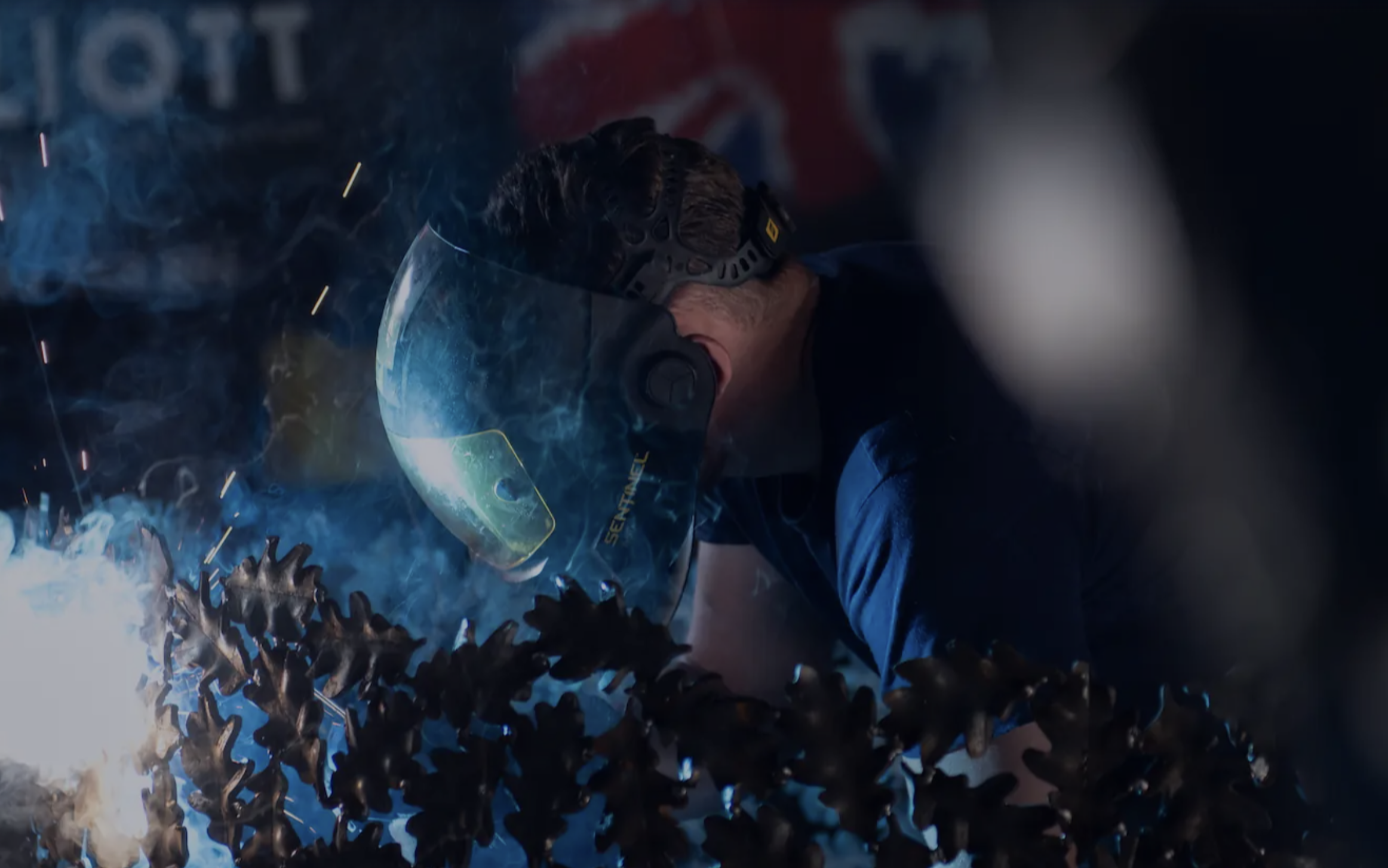
Thinking Beyond the Garden
In large gardens and estates, space is not limited — but that does not make it easy to define.
Open landscapes can feel incomplete without a point of focus. Structure may exist in planting or layout, but something is often missing — a feature that anchors the space and gives it clarity.
This is where outdoor sculpture becomes essential.
Not as decoration, but as a way of shaping how the landscape is experienced.
The Single Statement Approach
One of the most effective approaches in large gardens is simplicity.
Rather than introducing multiple elements, many landscapes benefit from:
→ one carefully positioned large sculpture
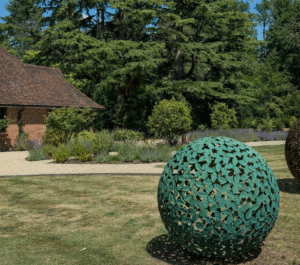
A large bronze or steel sculpture can:
- anchor an open lawn
- define a central space
- create a focal point visible across distance
This approach works particularly well in:
- estates
- formal gardens
- expansive private land
Sculpture Along a Viewline
Long views are often a defining feature of larger landscapes.
Positioning sculpture at the end of a sightline creates:
→ direction
→ purpose
→ visual balance
A steel sculpture with a strong silhouette, or a bronze piece with defined form, can hold attention across distance — drawing the eye naturally through the space.
Sculpture as Arrival
First impressions matter.
In many properties, sculpture is used to mark:
- entrances
- driveways
- approach routes
A large-scale sculpture placed in this position establishes:
→ presence
→ identity
→ a sense of arrival
It becomes the first interaction with the space.
Integrating with Nature
Not all sculpture needs to dominate.
In more natural landscapes, sculpture can be:
→ partially revealed
→ integrated into planting
→ positioned within the flow of the land
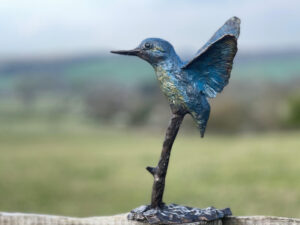
Wildlife bronze sculpture works particularly well in these settings, where it feels connected to the environment rather than separate from it.
Courtyards and Defined Spaces
In more structured areas, such as courtyards or garden rooms, sculpture plays a different role.
Here, it becomes:
→ a central feature
→ a point of symmetry
→ a defining element within the space
A bronze sculpture in a courtyard introduces:
- warmth
- detail
- a sense of permanence
Contemporary Gardens and Steel Sculpture
Modern landscapes often rely on clarity and restraint.
Within these environments, steel sculpture is particularly effective.
It can:
→ reinforce architectural lines
→ introduce contrast against planting
→ create structure within open space
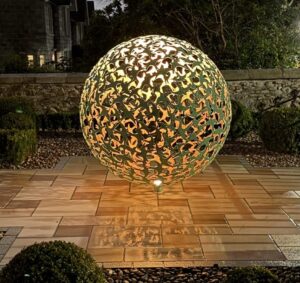
A steel sphere sculpture or abstract form often works through proportion rather than detail.
Sculpture and Water
Water introduces reflection — adding another layer to sculpture.
Placed beside:
- ponds
- reflecting pools
- water features
A sculpture can be experienced twice:
→ as form
→ as reflection
Bronze, in particular, responds well to this setting, creating depth and variation.
Using Elevation
In larger estates, elevation can be used to increase visibility.
Placing sculpture:
→ on a rise
→ along a slope
→ at a higher vantage point
Allows it to:
- hold presence across greater distance
- become a landmark within the landscape
Multiple Sculptures — When It Works
While restraint is often key, multiple sculptures can work when:
→ the landscape is very large
→ pieces are spaced intentionally
→ each has its own position within the layout
This creates a journey through the space, rather than a single focal point.
Matching Sculpture to Lifestyle
The most successful sculptures feel connected to the property.
This may include:
- Horse sculpture for equestrian estates
- Wildlife sculpture for countryside settings
- Abstract steel sculpture for contemporary homes
This alignment ensures the sculpture feels considered — not added.
— Key Questions —
What type of sculpture works best in large gardens?
Large-scale bronze or steel sculptures that can hold presence across distance.
Should I choose one sculpture or several?
In most cases, a single statement piece is more effective.
Where should sculpture be placed?
At focal points, along sightlines, or in key areas of the landscape.
What materials are best for outdoor sculpture?
Bronze and steel due to durability and visual impact.
Can sculpture be integrated into natural landscapes?
Yes — particularly wildlife and figurative work.
A Final Perspective
A large garden offers opportunity — but without structure, that space can remain undefined.
Sculpture provides that structure.
It introduces focus, anchors the landscape, and creates something that remains constant within an environment that is always changing.
A well-placed sculpture does more than fill space.
It defines it.
Enquiries
For large outdoor sculpture commissions, including bronze and steel work for gardens, estates, and landscapes, we welcome enquiries from clients worldwide.