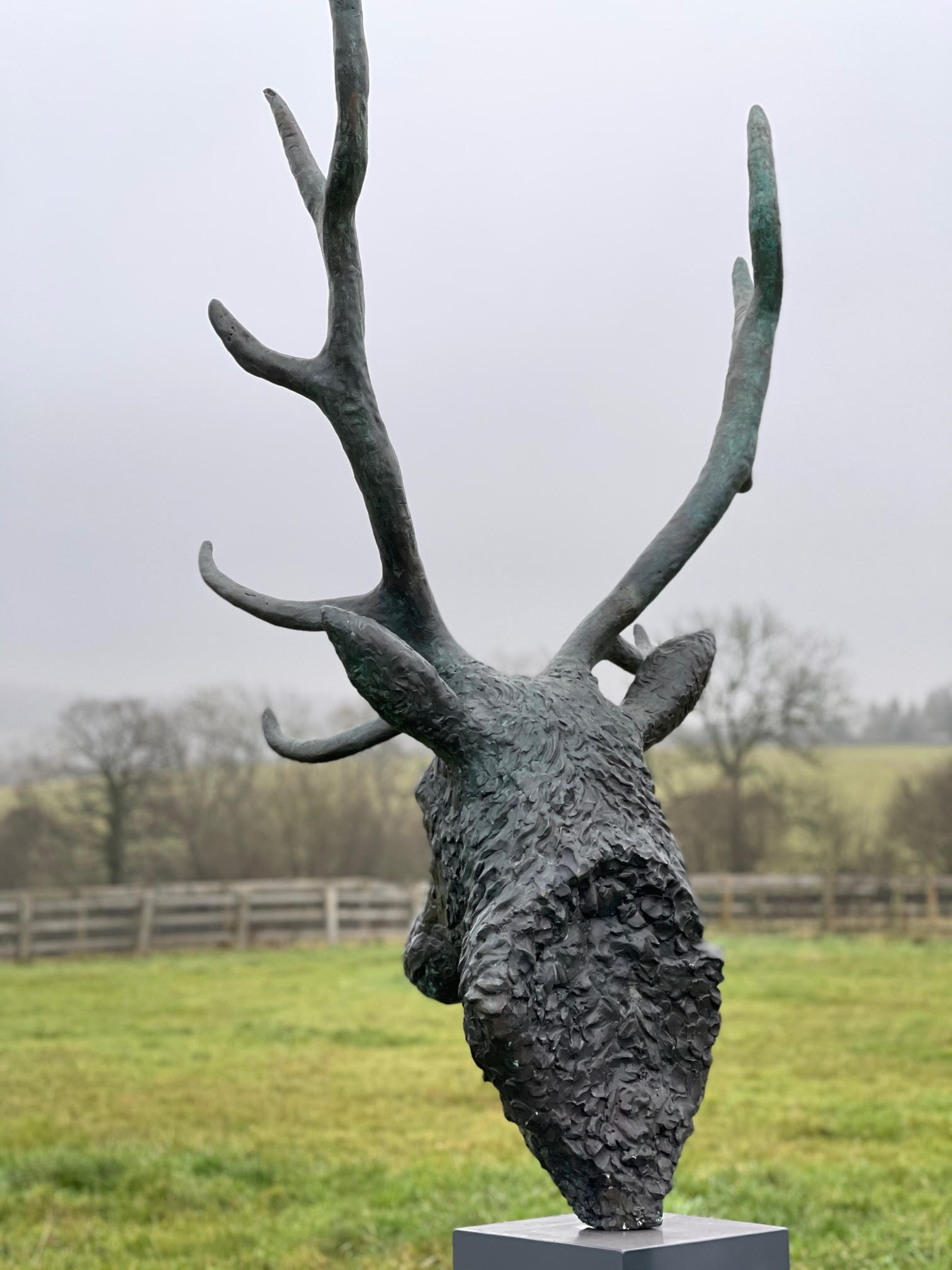
Start with the Space — Not the Sculpture
The most common mistake when selecting sculpture is starting with the piece itself.
In reality, the process works in reverse.
A large garden sculpture should always begin with the space — its proportions, its layout, and how it is experienced. Without this understanding, even the strongest sculpture can feel out of place.
The question is not:
“What sculpture do I like?”
But:
“What does this space require?”
Reading the Landscape
Every garden or estate has a natural structure.
This may be:
— a long, open lawn
— a series of defined garden rooms
— a formal layout with symmetry
— a more organic, flowing landscape
A sculpture should respond directly to this.
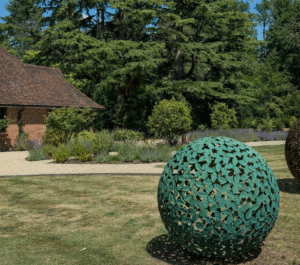
In open landscapes, it must hold presence across distance.
In enclosed spaces, it must reward closer viewing.
Understanding this distinction is what defines a successful placement.
The Role of Scale
Scale is not simply about size — it is about proportion.
A sculpture must relate to:
- The width of the space
- The height of surrounding elements
- The distance from which it is viewed
A large-scale garden sculpture should:
— be visible from key viewpoints
— maintain clarity at distance
— avoid feeling either insignificant or overwhelming
This balance is rarely accidental — it is carefully resolved.
One Statement vs Multiple Pieces
In high-end gardens, restraint often defines quality.
Rather than filling a space with multiple elements, many clients choose:
👉 one defining sculpture
A single large sculpture can:
- Anchor the entire landscape
- Create a focal point
- Simplify the visual experience
Multiple smaller pieces can dilute impact.
At this level, less is often more.
Material as a Design Decision
Material influences how sculpture sits within a garden.
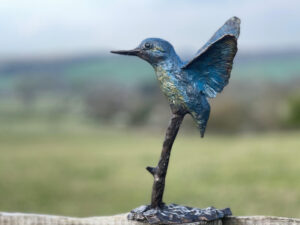
Bronze
— warmer in tone
— suited to natural environments
— ideal for figurative and detailed work
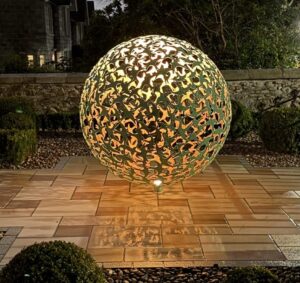
Steel & Oxidised Steel
— more architectural
— defined, structured presence
— suited to contemporary gardens
The choice of material should align with both:
- The style of the landscape
- The surrounding architecture
Formal vs Natural Placement
Different landscapes require different approaches.
Formal Gardens
— symmetry
— clear axes
— structured planting
Sculpture is often placed:
👉 centrally
👉 at the end of a visual line
👉 as a defined focal point
Natural Landscapes
— flowing layout
— irregular structure
— organic planting
Sculpture is often:
👉 slightly offset
👉 discovered through movement
👉 integrated into the land
Distance and Experience
A sculpture is not viewed from a single point.
It is experienced:
— on approach
— from a distance
— up close
A successful outdoor sculpture must work at all three levels.
From afar:
👉 silhouette and form
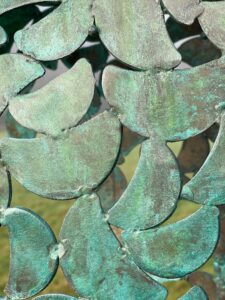
Up close:
👉 detail and craftsmanship
Light and Orientation
Light is often overlooked — but it defines how sculpture is seen.
Consider:
- Direction of sunlight
- Shadows throughout the day
- Seasonal changes
A sculpture placed correctly will:
- reveal form through light
- change subtly over time
- maintain interest from different angles
Matching Sculpture to Lifestyle
Beyond design, sculpture often reflects how a space is used.
For example:
- Equestrian estates may favour horse sculpture
- Countryside properties may incorporate wildlife bronze sculpture
- Contemporary homes may lean towards steel or abstract forms
This connection ensures the sculpture feels relevant, not imposed.
Commission vs Selection
At this level, many clients move beyond choosing existing work.
A bespoke sculpture commission allows for:
— precise scale
— controlled placement
— alignment with the landscape
This results in a piece that feels entirely connected to its environment.
— Key Questions —
What size sculpture is right for a large garden?
Large enough to hold presence across distance, but balanced with the space.
Where should sculpture be placed?
At focal points, along sightlines, or where the landscape naturally draws attention.
What material is best for outdoor sculpture?
Bronze and steel are the most widely used due to durability and visual impact.
Should I choose one sculpture or multiple?
In high-end settings, a single statement piece is often more effective.
Is commissioning better than buying?
For larger or more complex spaces, commissioning provides a more refined result.
A Final Thought
A garden can exist without sculpture.
But a garden defined by sculpture becomes something else entirely.
A large garden sculpture introduces clarity, focus, and permanence — shaping how the space is experienced and remembered.
It is not an addition.
It is a decision.
Enquiries
For large garden sculpture commissions, including bronze and steel work for estates, private gardens, and architectural landscapes, we welcome enquiries from clients worldwide.