Introduction
At the highest level of sculpture, scale changes everything.
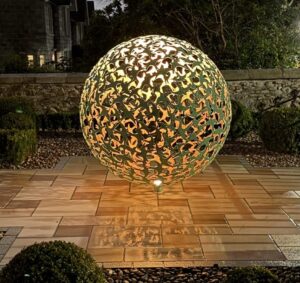
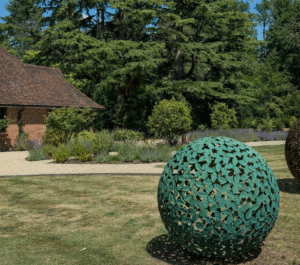
A large bronze sculpture is not simply an object increased in size — it is a fundamentally different form of work. It must operate within space, hold its presence across distance, and interact with landscape and architecture in a way smaller pieces cannot.
Across private estates, public art projects, and architectural developments, large-scale bronze sculpture has become a defining element — used not just for visual impact, but to structure and anchor entire environments.
Understanding Scale in Sculpture
Scale is not measured purely in dimensions.
It is defined by how a sculpture relates to its surroundings.
A piece may be physically large, but if it does not respond to:
- The size of the landscape
- The height of surrounding structures
- The openness of the space
—it will fail to hold presence.
Successful large bronze sculpture considers:
- Proportion
- Viewing distance
- Spatial context
It is designed for where it will exist, not simply created and placed.
Sculpture as a Structural Element
In contemporary landscape and architectural design, sculpture is increasingly used as a structural component.
Rather than decoration, it becomes:
- A focal point
- A spatial anchor
- A defining feature within the environment
This is particularly evident in:
- Large private estates
- High-end residential developments
- Public and commercial spaces
In these contexts, sculpture shapes how a space is experienced — guiding movement, framing views, and establishing hierarchy.
Designing for Distance
One of the defining challenges of large-scale sculpture is visibility across distance.
A sculpture must:
- Hold a strong silhouette
- Remain legible from afar
- Reveal detail gradually as it is approached
This requires a balance between:
- Simplicity of form
- Complexity of surface
In bronze, this balance is particularly effective — allowing the sculpture to function both as a bold form and a detailed work of craftsmanship.
Material and Presence
Bronze plays a critical role in how large-scale sculpture performs.
Its qualities include:
- Structural strength
- Ability to capture fine detail
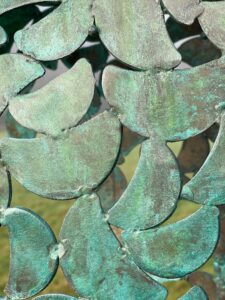
- A surface that evolves through patina
Unlike lighter or less durable materials, bronze carries weight — both physically and visually.
This gives large bronze sculpture a sense of permanence that is essential in:
- Outdoor environments
- Public installations
- Estate landscapes
Interaction with Landscape
A large sculpture must exist in dialogue with its environment.
This includes:
- Topography
- Planting
- Light
- Movement through the space
Rather than competing with the landscape, the sculpture should:
- Complement natural forms
- Introduce contrast where needed
- Reinforce spatial structure
This relationship is what defines successful outdoor bronze sculpture at scale.
Architectural Integration
In many contemporary projects, sculpture is developed alongside architecture.
It is used to:
- Balance built form
- Create visual endpoints
- Introduce material contrast
A large bronze sculpture positioned within an architectural setting becomes part of the design language — interacting with materials such as:
- Stone
- Concrete
- Glass
- Steel
This integration elevates both the sculpture and the space.
Movement and Form
At scale, movement becomes more pronounced.
Whether abstract or figurative, the form must:
- Flow across its structure
- Guide the eye
- Maintain coherence from multiple angles
In equestrian and figurative work, this is particularly important.
A large bronze horse sculpture, for example, must capture:
- Energy
- Balance
- Anatomical accuracy
—while still functioning as a unified form at distance.
Installation and Engineering
Large-scale sculpture requires careful consideration beyond design.
This includes:
- Structural engineering
- Foundations and load-bearing
- Transport and installation logistics
These technical aspects are integral to the process, ensuring that the sculpture is not only visually successful, but stable and enduring.
At this level, sculpture becomes a collaboration between:
- Artist
- Engineers
- Project teams
Longevity and Evolution
One of the defining characteristics of bronze is its ability to age gracefully.
Over time:
- Patina develops
- Surface tones deepen
- The sculpture integrates into its surroundings
This evolution enhances the work rather than diminishing it — making bronze uniquely suited to long-term outdoor installation.
The Value of Large-Scale Sculpture
A large bronze sculpture represents more than a visual addition.
It is:
- A long-term investment
- A defining feature of a property or development
- A work that carries both artistic and material value
For private clients, collectors, and developers, this makes sculpture one of the most impactful elements within a space.
Frequently Asked Questions
What defines a large-scale bronze sculpture?
A sculpture designed to operate within expansive environments, considering scale, distance, and spatial context.
How large should a sculpture be for an estate?
It depends on the landscape, but larger spaces typically require sculptures that can hold presence across distance.
Why is bronze used for large sculptures?
Because of its strength, durability, and ability to capture detail at scale.
Can large sculptures be installed internationally?
Yes — with proper planning, large-scale bronze sculptures are regularly delivered and installed worldwide.
How long does a large sculpture take to create?
Typically between 6–12 months, depending on scale and complexity.
Final Thoughts
Designing a large bronze sculpture is a process of understanding space as much as form.
At this level, sculpture is no longer an object placed within a landscape — it becomes part of the structure of the environment itself.
Through scale, material, and placement, it defines how a space is experienced — creating something that remains long after everything else changes.
Enquire About Large-Scale Sculpture
We create large-scale bronze and steel sculpture for private estates, architectural projects, and public art installations worldwide.
Each piece is designed to respond to its environment — ensuring it holds presence, balance, and permanence.
Thinking about a bronze sculpture of your own?
Every piece leaves one studio. Designed, cast or hand-fabricated in silicon bronze, patinated and installed by the people who made it. Work ranges from tabletop pieces to landmark sculpture at fifteen metres and beyond.
See how a bronze sculpture is made, what it costs and how long it takes on our bronze sculpture page.
Explore bronze sculptureBook a call with CharlesOr speak to the studio on +44 (0) 1494 758 896