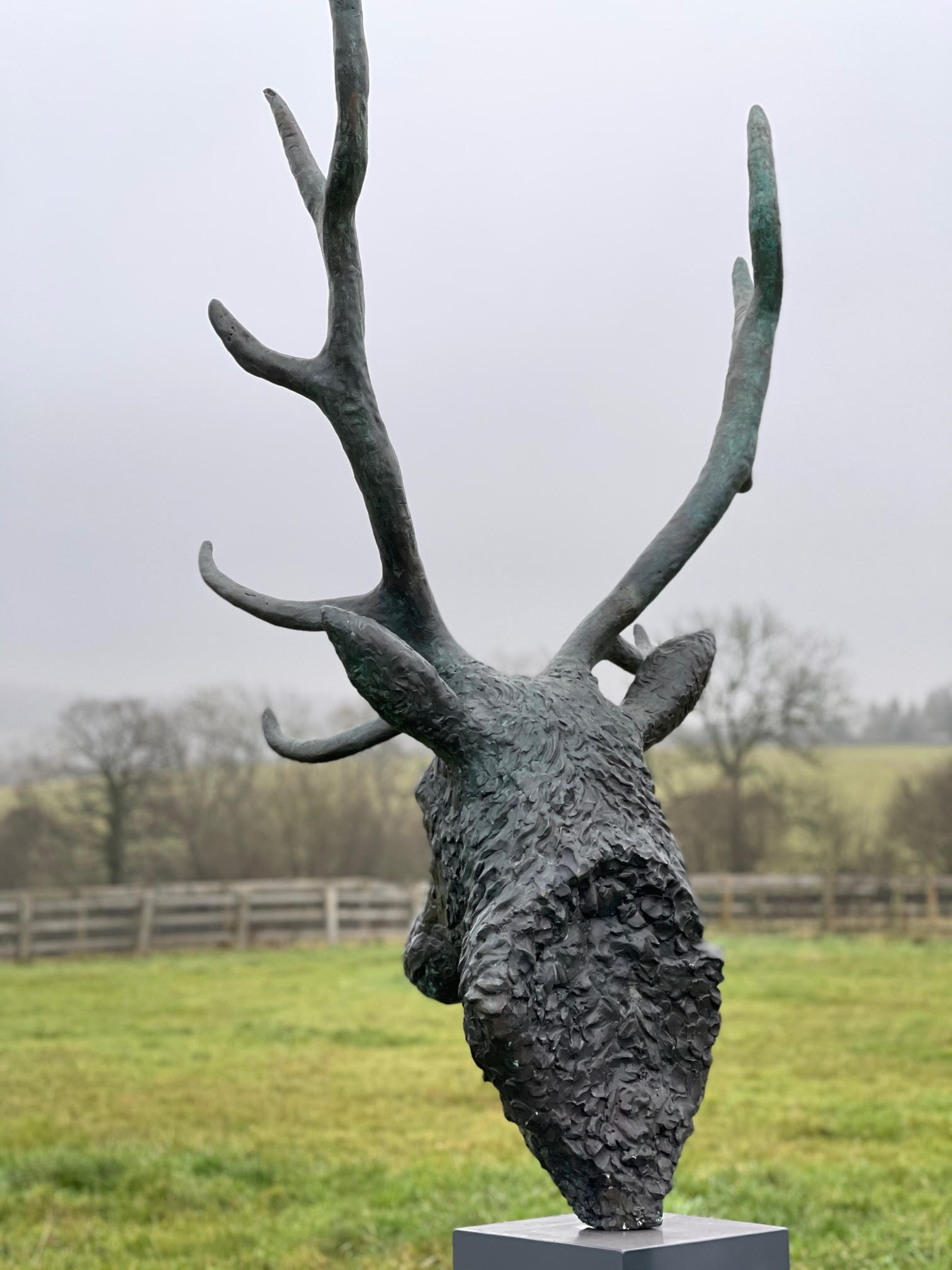
How to Commission a Large Bronze Sculpture (UK & International Guide)
The Decision Before the Process
Commissioning a sculpture does not begin with drawings or measurements.
It begins with a decision — to create something that does not yet exist.
For many clients, this step comes when a space feels incomplete. A garden lacks a focal point. An estate requires definition. A development needs identity.
A large bronze sculpture is rarely an impulse. It is considered — often tied to a place, a purpose, or a moment worth preserving.
What Clients Typically Ask First
Before any design begins, the same questions tend to arise:
— How large should it be?
— What will it cost?
— How long will it take?
— Can it be done internationally?
These are not just practical concerns — they shape the entire direction of the project.
Step One — Defining the Space
Every sculpture starts with its environment.
Not in detail, but in understanding:
- The scale of the landscape or architecture
- How the space is approached
- Where attention naturally falls
A sculpture is not inserted into a space.
It is designed for it.
This is what determines whether the final piece feels natural — or misplaced.
Step Two — Establishing Direction
At this stage, the project begins to take form.
This may involve:
— a subject (horse, wildlife, abstract)
— a style (traditional or contemporary)
— a material (bronze or steel)
For bronze sculpture, the process often begins with clay — allowing form to develop before it becomes fixed in material.
The aim is not to finalise immediately, but to explore direction with clarity.
Step Three — Scale and Presence
Scale is one of the most defining aspects of a commission.
A large-scale bronze sculpture must:
- Hold presence across distance
- Relate to its surroundings
- Remain balanced within the space
Too small, and it disappears.
Too large, and it dominates.
The correct scale is not guessed — it is resolved through experience and understanding of the site.
Step Four — The Making of the Sculpture
Once the direction is clear, the sculpture moves into production.
For bronze, this involves:
— sculpting the original form in clay
— refining detail and movement
— casting using the lost wax process
— finishing and applying patina
Each stage preserves the original intention of the piece, translating it into a material that will endure.
Step Five — Delivery and Installation
For many clients — particularly internationally — this is where uncertainty arises.
In reality, this stage is highly structured.
It includes:
- Specialist crating
- Coordinated transport
- Site preparation
- Professional installation
A large bronze sculpture is not simply delivered — it is positioned with intent, ensuring it sits correctly within its environment.
Timescale (Realistically)
Rather than fixed timelines, it is more accurate to think in ranges:
— Smaller works: a few months
— Mid-scale sculpture: 4–6 months
— Large-scale or complex projects: 6–12 months
The timeline reflects craftsmanship — not delay.
Cost (Without Guesswork)
Cost is determined by:
- Scale
- Complexity
- Material
- Level of detail
For large bronze sculpture, projects typically fall within:
👉 £25,000 – £500,000+
At this level, cost reflects:
- Material
- Time
- Skill
- Permanence
UK vs International Clients
The process remains largely the same.
The difference lies in:
- Logistics
- Coordination
- Installation planning
Clients in the United States and internationally regularly commission UK-based sculptors — particularly for bronze sculpture, where craftsmanship is a key factor.
Distance does not limit the process — it simply adds another layer of coordination.
What Defines a Successful Commission
Not the size.
Not the cost.
But the outcome.
A successful sculpture:
- Feels right within its environment
- Holds presence over time
- Becomes part of the space
It is not noticed as something new — it feels as though it has always belonged.
— Key Questions —
Do I need a clear idea before starting?
No — most projects begin with a conversation rather than a fixed concept.
Can sculpture be commissioned for a specific property?
Yes — in most cases, it is designed specifically for its location.
Is bronze the best material?
For durability, detail, and longevity — yes.
Can international clients commission work easily?
Yes — the process is well established and fully managed.
Is installation included?
For large-scale work, installation is typically part of the overall project.
A Closing Note
Commissioning a sculpture is not a transaction.
It is a process of creating something that did not exist before — something that will remain long after the project is complete.
A large bronze sculpture, once installed, becomes part of its environment. Not temporary. Not replaceable.
Permanent.
Enquiries
For large bronze sculpture commissions in the UK and internationally, we welcome enquiries from private clients, estates, architects, and developers.
Thinking about a bronze sculpture of your own?
Every piece leaves one studio. Designed, cast or hand-fabricated in silicon bronze, patinated and installed by the people who made it. Work ranges from tabletop pieces to landmark sculpture at fifteen metres and beyond.
See how a bronze sculpture is made, what it costs and how long it takes on our bronze sculpture page.
Explore bronze sculptureBook a call with CharlesOr speak to the studio on +44 (0) 1494 758 896