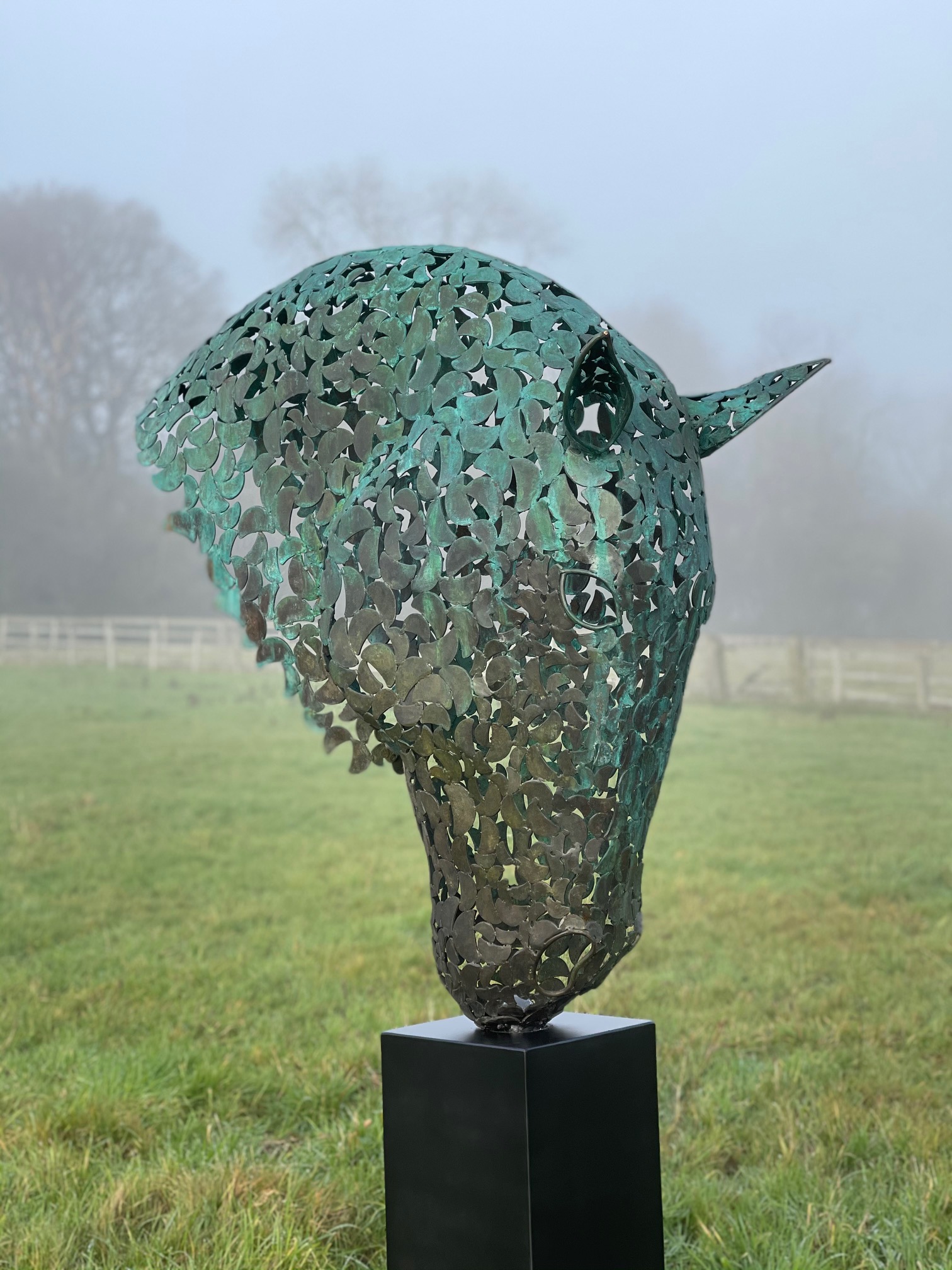
Horse Head Sculpture: Bronze Commissions for Estates, Interiors & Collectors
Introduction
Among equestrian sculpture, the horse head holds a distinct position.
It is a subject that allows for both precision and expression — capturing the character of the horse in a more focused and intimate form. Within private estates, interiors, and collections, a bronze horse head sculpture offers a refined alternative to full-scale work, while maintaining the same level of craftsmanship and presence.
For collectors and clients, it represents not only the horse itself, but a study of form, detail, and individuality.
A Subject of Detail and Expression
The horse head presents a unique challenge.
Without the full body, every element must carry greater significance:
- The tension of the jaw
- The line of the neck
- The positioning of the ears
- The focus within the eyes
These details define the sculpture.
A successful horse head sculpture captures not just anatomy, but expression — creating a piece that feels alive despite its stillness.
Bronze as the Ideal Material
Bronze is particularly suited to this level of detail.
It allows for:
- Fine surface definition
- Smooth transitions between form
- Depth within the final patina
A bronze horse head sculpture retains the subtleties of the original modelling, preserving the character of the work through the casting process.
Over time, the patina develops further, adding richness and allowing the sculpture to integrate into its surroundings.
Interior and Exterior Placement
Unlike large-scale sculptures, horse head pieces are often more versatile in placement.
They are commonly positioned:
Within Interiors
- Entrance halls
- Staircases
- Living spaces
- Offices or studies
Within Estates
- Courtyards
- Stable yards
- Garden features
- Architectural niches
This flexibility allows the sculpture to operate both as a focal point and as part of a wider setting.
Scale and Proportion
Horse head sculptures can vary significantly in size.
From smaller, detailed pieces to large-scale bronze horse head sculptures, the choice of scale depends on:
- The intended location
- The surrounding architecture
- The level of visual impact required
Even at smaller scales, the subject maintains presence due to its recognisable form.
A Personal Commission
Many horse head sculptures are commissioned to represent a specific horse.
This process involves:
- Studying reference imagery
- Understanding the horse’s conformation
- Capturing individual characteristics
The aim is not only likeness, but recognition — creating a sculpture that feels immediately familiar to the owner.
A Connection to Equestrian Life
For those involved in equestrian environments, the horse is central.
A bronze horse head sculpture reflects:
- A connection to the animal
- An appreciation for its form and movement
- A personal or professional relationship
Within estates and collections, these works often carry meaning beyond their visual presence.
Contemporary and Traditional Styles
Horse head sculpture can be approached in different ways.
Traditional
- Detailed and anatomically precise
- Focused on realism
Contemporary
- Simplified or abstracted
- Emphasising form and line
Both approaches can work effectively, depending on:
- The setting
- The client’s preference
- The overall design direction
Sculpture as a Feature Within Interiors
In interior settings, sculpture plays a different role.
A bronze horse head can:
- Introduce warmth through material
- Provide contrast against modern surfaces
- Act as a focal point within a space
In high-end interiors, it often replaces more conventional decorative elements, offering something more permanent and considered.
A Lasting Work
Like all bronze sculpture, a horse head piece is designed to endure.
It is:
- Structurally strong
- Resistant to environmental conditions
- Able to develop character over time
This longevity makes it suitable for both interior and exterior settings, maintaining its presence across years of use.
Frequently Asked Questions
What is a horse head sculpture used for?
It is often used as a feature piece within interiors, estates, or equestrian environments.
Can a horse head sculpture represent a specific horse?
Yes — many are commissioned to capture the likeness and character of an individual horse.
Is bronze suitable for indoor sculpture?
Yes — bronze works well indoors and develops a rich surface over time.
What size can horse head sculptures be?
They range from smaller interior pieces to large-scale statement sculptures.
Where is the best place to position a horse head sculpture?
Common placements include entrance halls, courtyards, and stable areas.
Final Thoughts
The horse head offers a unique perspective within equestrian sculpture.
It focuses attention on detail, expression, and form — creating a work that is both refined and powerful. In bronze, this subject becomes something permanent, capable of holding presence within both interior and exterior environments.
For collectors and estates, it provides a way to engage with equestrian sculpture in a more concentrated and considered form.
Enquire About Horse Head Sculpture
We create bespoke bronze horse head sculptures for private clients, collectors, and equestrian estates worldwide.
Each piece is designed to capture form, character, and lasting presence.
Thinking about a bronze sculpture of your own?
Every piece leaves one studio. Designed, cast or hand-fabricated in silicon bronze, patinated and installed by the people who made it. Work ranges from tabletop pieces to landmark sculpture at fifteen metres and beyond.
See how a bronze sculpture is made, what it costs and how long it takes on our bronze sculpture page.
Explore bronze sculptureBook a call with CharlesOr speak to the studio on +44 (0) 1494 758 896