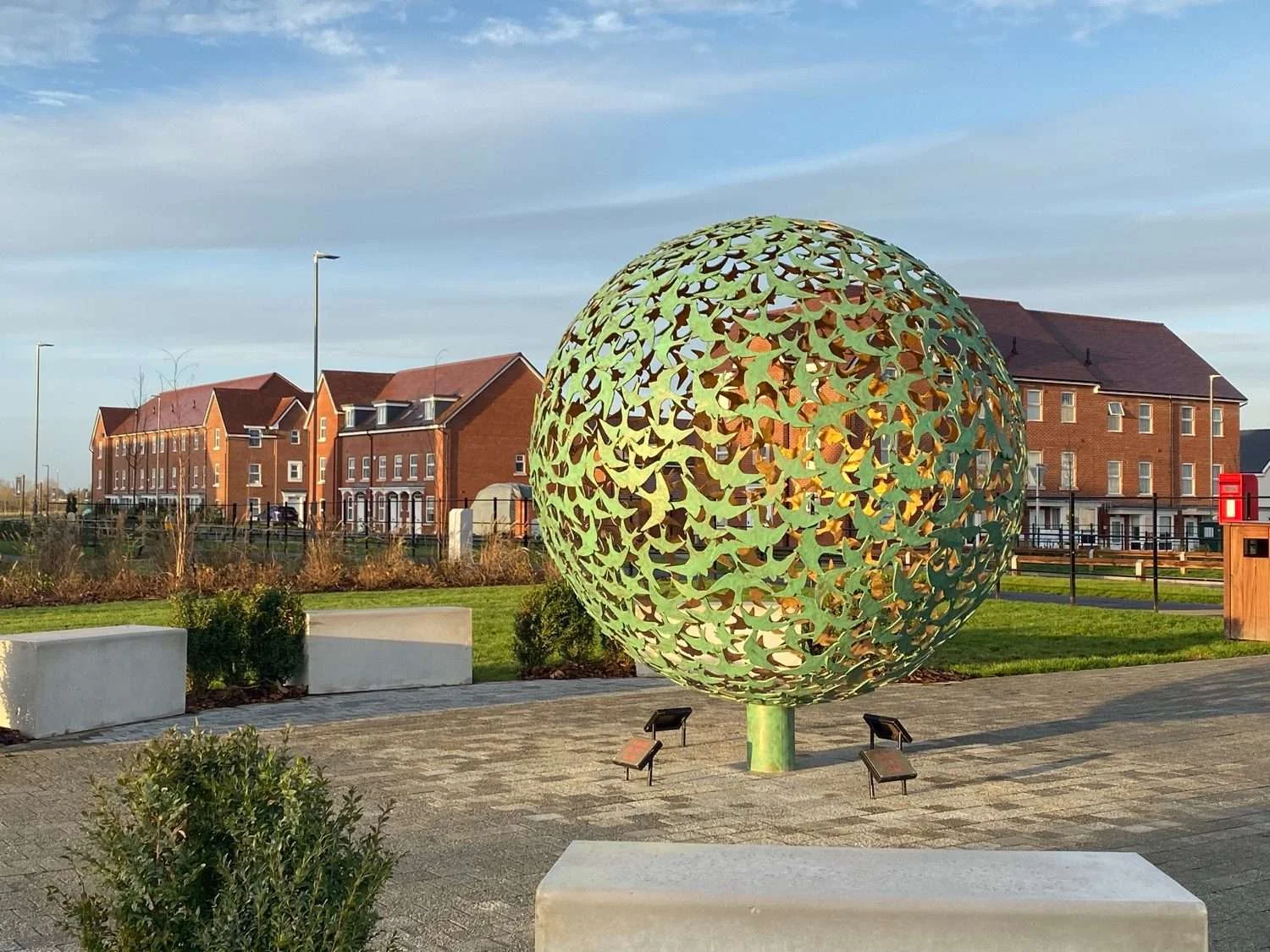
Section 106 and Public Art: The Complete 2026 Guide – S106
Public art often arrives in a developer’s world through a single line in a Section 106 agreement. It can look like a cost and a condition standing between you and occupation. Approached well, it is one of the few obligations that gives something back: a landmark, an identity and a genuine sense of place that pays its way long after the scheme completes.
This is a complete, current guide for developers, architects, landscape architects and planning teams. It covers what Section 106 is, how public art fits within it, what it costs, how the strategy is built and the condition discharged, the real disadvantages to weigh, and, importantly, where the law actually stands in 2026 after years of proposed reform. It is written to be practical, and it is deliberately honest about the parts other guides skip.
What is Section 106?
Section 106 of the Town and Country Planning Act 1990 gives a local planning authority the power to enter into a legally binding planning obligation with a developer. The purpose is straightforward: to make a development acceptable in planning terms by securing commitments that offset or mitigate its impact.
Those commitments range from affordable housing and highways works to open space, education contributions and, in many authorities, public art. Because the obligation is tied to the land, it binds not only the original developer but subsequent owners too, until it is satisfied or formally discharged.
In short, a Section 106 agreement is the mechanism by which a council secures the public benefits that justify granting your permission. Where local policy supports it, public art is one of those benefits.
Section 106, CIL and the Infrastructure Levy: the 2026 position
This is where many older guides are now wrong, so it is worth being precise.
There are two live mechanisms for developer contributions in England. Section 106 obligations are negotiated and scheme-specific, and they can be earmarked for a defined purpose such as public art on your site. The Community Infrastructure Levy (CIL) is a separate, locally set, largely non-negotiable charge per square metre that authorities generally spend on infrastructure at their discretion. A single development can be subject to both CIL and a Section 106 obligation at the same time, with CIL covering wider infrastructure and Section 106 handling site-specific matters.
You may have read that Section 106 was due to be scrapped. The Levelling-up and Regeneration Act 2023 proposed a new Infrastructure Levy to replace much of CIL and parts of Section 106 over a phased period. That proposal was not implemented. As of 2026, both Section 106 and CIL remain in force and in active use, the Infrastructure Levy has not replaced them, and reform of the system is still being debated rather than enacted. Any planning for a current scheme should proceed on the basis that Section 106 applies, while keeping an eye on policy as it evolves.
For public art specifically, the practical takeaway is simple: it is almost always secured through Section 106 or through design policy, not through CIL, because CIL money is not usually earmarked for a specific artwork on your scheme.
How long does a Section 106 obligation last?
A Section 106 obligation lasts until it is satisfied or discharged, and because it runs with the land it can outlive the original developer. Obligations generally fall into three types:
Time-linked obligations, which must be met by a set date or within a defined period. Event-linked obligations, which are triggered by a milestone such as commencement, a set number of occupations, or practical completion. And perpetual obligations, which continue indefinitely, as with the long-term maintenance of a permanent feature. Public art frequently involves both an event-linked element, such as installation before occupation, and a perpetual element, in the form of ongoing maintenance.
How long does a Section 106 agreement take to complete?
The agreement is negotiated alongside the planning application, so its timing is bound up with the wider decision. As a broad guide, once heads of terms are agreed a first draft may be prepared within a couple of weeks, with further drafting and legal negotiation taking anywhere from a few weeks to a few months depending on complexity, before the agreement is sealed around the grant of permission. Complex sites, multiple landowners or contested viability can extend this considerably.
The important point for public art is that the agreement usually only sets the requirement and the value. The detail, the actual artwork, is then reserved to a planning condition to be discharged later. That is where the real project begins.
Where to find Section 106 agreements
Section 106 agreements are public documents. You can generally find them on the relevant council’s online planning register, attached to the planning application, and in London the Planning London Datahub aggregates application data across all boroughs, which makes it far easier to identify schemes carrying public art obligations. Completed agreements bind the land, so they can also be traced through property and land records where a register entry is thin.
Why public art is a strong way to meet a Section 106 requirement
Where an authority expects a contribution to placemaking or design quality, public art is one of the most rewarding ways to meet it, because unlike many obligations it produces a visible, lasting asset for the scheme. Done well, public art:
Raises design quality and gives a development a distinctive identity and a name. Improves legibility and wayfinding, helping people read and navigate a place. Enhances public open space and the public realm. Lifts the profile of a location, supporting regeneration and inward investment. And connects a scheme to its community and heritage, which supports the social value and design narrative that increasingly matters in planning decisions and in ESG reporting.
For developers, that last point is commercial, not just civic. A landmark artwork supports sales and lettings, differentiates a scheme in a crowded market, and signals quality to occupiers and investors alike.
Have a Section 106 obligation to meet? We turn planning conditions into landmarks, end to end. Speak to our studio about your scheme.
How much does public art cost under Section 106?
Most guides avoid this question. It is the one developers most want answered, so here is an honest treatment.
Where a value is attached to a public art obligation, authorities often reference the long-standing “percent for art” convention, commonly cited at around one percent of construction cost. This is a convention and a local policy position, not a national statutory figure, and it varies widely. The percentage is normally applied to build cost rather than total development value, though the exact base is a matter for the authority and for negotiation. We cover the mechanics in detail in Percent for Art Explained.
The figure that matters, though, is not the headline budget but what it has to cover. A public art budget is the cost of delivering a permanent, engineered, safe artwork in a public place, which means it needs to account for the artist’s design fee and the artwork itself, fabrication in the chosen material, structural engineering and foundations, transport and installation including craneage, insurance in transit and on site, professional or consultant fees, and a provision for long-term maintenance.
As a broad and illustrative guide only, modest budgets tend to suit an integrated or crafted feature, mid-range budgets support a substantial standalone sculpture, and larger budgets are what genuine landmarks require once engineering and installation at scale are accounted for. Every scheme is different, and these bands vary enormously with material, scale, site and complexity, so treat them as a way of thinking about ambition rather than a price list. The single most common costing mistake is to treat the budget as the price of an object, which squeezes the delivery elements and produces either a compromised piece or a stalled condition.
Not sure what your budget can achieve? We advise developers on what a given public art budget can realistically deliver, at no obligation. Ask us for an early view, or read Percent for Art Explained.
How to develop a public art strategy under Section 106
Authorities generally expect a public art strategy before anything is made. A strong strategy is what unlocks the process and gives planners confidence the condition will be met properly. In practice it moves through clear stages:
First, assemble the right team and agree the vision, aligning developer, design team and authority around what the art is for and where it sits. Second, develop the strategy itself, covering locations, budget, timeline, community engagement and how the work responds to the site, its architecture and its heritage. Third, select the artist, whether by direct appointment, limited invitation or open call, prioritising a maker who can deliver quality and a safe, on-programme installation at scale. Fourth, manage delivery end to end, through design development, engineering, approvals, fabrication, installation and handover.
We set out that delivery journey in full, from planning condition to finished landmark, in Commissioning Public Art Under Section 106.
Starting a public art strategy? Bring us in early and the artwork is integrated from the first design, not added late. Start the conversation.
Discharging the condition, monitoring and enforcement
Because the artwork’s detail is usually reserved to a condition, the obligation is not met until that condition is discharged. Authorities generally want to see the approved strategy delivered, the artwork installed as agreed, and maintenance arrangements in place, before they will confirm compliance.
This matters more than it first appears. Planning obligations are enforceable: an authority can pursue breaches, and an unmet public art condition can hold up occupation or completion sign-off, with real programme and cash-flow consequences. Councils increasingly monitor delivery of obligations rather than assume compliance. The lesson is to treat public art as a managed project with its own programme, not as a purchase to be made at the last minute, and to keep the authority engaged so the condition closes cleanly.
The disadvantages and viability questions to weigh
An honest guide names the downsides. Section 106 adds legal cost and negotiation time, and obligations can constrain how land is used or phased. Public art specifically carries delivery risk if it is under-budgeted or poorly managed, and the maintenance obligation is a genuine long-term commitment. Where a scheme’s viability is marginal, the scale of obligations, including public art, is a legitimate part of the viability discussion with the authority, and can be negotiated on evidence. The way to keep public art on the right side of this ledger is to plan it early, budget it realistically for the full scope, and appoint people who can deliver it without risk landing back on the development team.
A quick note on the rest of the UK
Section 106 as described here is an England and Wales mechanism under the Town and Country Planning Act 1990, and practice differs in Wales. Scotland uses Section 75 planning obligations under its own legislation, and Northern Ireland has its own planning agreement regime. If your scheme is outside England, the principle of securing public art through a planning agreement still applies, but confirm the specific route with your planning adviser.
How Charles Elliott Sculpture helps
We work in close partnership with developers, architects, landscape architects and councils to deliver public art from concept to installation as a fully considered, end-to-end service. That means one accountable studio taking a piece from vision, scale models and finish samples, through design development, engineering and approvals, to fabrication, installation and aftercare, supported by our foundry and engineering partners. As the lead artist and designer, we carry the creative vision; as project managers, we run the delivery. For you, that is a single point of contact, a single line of responsibility, and the delivery risk carried by people who do this for a living, so a Section 106 condition becomes the landmark your scheme is known for.
If you have a public art obligation on a current or forthcoming scheme, we would welcome an early conversation.
Discuss your project with our studio
Developer’s quick checklist
Confirm early whether your authority expects public art, and check its local plan and any public art SPD. Establish the value and the base it is calculated against. Budget for the full scope, not just the artwork. Fix the best locations at design stage, not at the end. Appoint a maker or studio that can prove delivery at scale. Agree the strategy with the authority before fabrication. Plan installation into the construction programme. And put a maintenance plan in place so the condition can be discharged cleanly.
Frequently asked questions
Is Section 106 still in force in 2026? Yes. Both Section 106 and CIL remain in force in England in 2026. The Infrastructure Levy proposed under the Levelling-up and Regeneration Act 2023 was not implemented to replace them, and reform is still under discussion rather than enacted. Confirm the current position for your scheme with your planning adviser.
Does Section 106 always require public art? No. It depends on the authority’s local policy and the scheme. Some authorities actively expect public art through their local plan or a public art SPD; others do not. Check the position for your specific site.
Is public art funded through Section 106 or CIL? Usually Section 106, because obligations can be earmarked for a specific purpose on your scheme. CIL is generally not the route for a site-specific commission.
How much does public art cost under Section 106? Where a figure applies, authorities often reference the “percent for art” convention of around one percent of construction cost, but this varies widely, and the budget must cover design, fabrication, engineering, installation, insurance, fees and maintenance, not just the artwork.
What happens if the public art condition is not met? Planning obligations are enforceable, and an unmet condition can delay occupation or sign-off. Treating public art as a managed project, and keeping the authority engaged, is the way to discharge the condition cleanly.
Who chooses the artist? Selection depends on the scheme and authority, and may be a direct appointment, a limited invitation or an open call. The priority is a maker who can deliver both quality and a safe, on-programme installation.
This article is general guidance, not legal or planning advice. Section 106 policy, public art requirements and reform are evolving and vary by local authority; confirm the current position for your scheme with your planning consultant or the local planning authority.