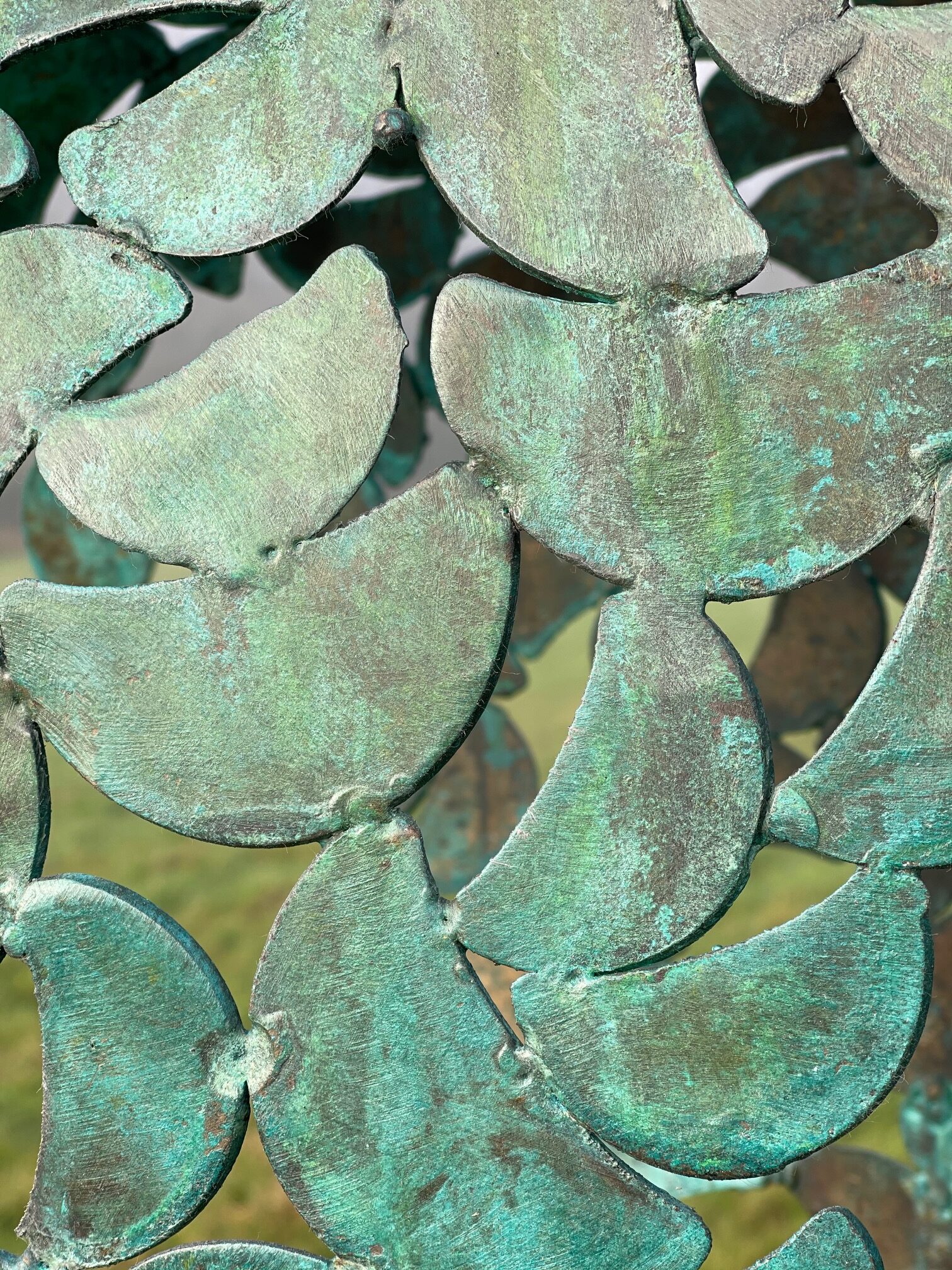
Aged Bronze and Verdigris Finishes: Understanding Surface, Process and Longevity
The surface of a sculpture is where material and environment meet most visibly. In bronze work, that meeting is defined by patination, the process that sets not only how a piece looks at installation but how it will evolve over time. A bronze patina is not a final decorative flourish. It is a considered decision that shapes how the sculpture sits in its surroundings, how it responds to light, and how it matures across decades.
What is bronze patination?
At its core, bronze patination is a controlled chemical process applied to the surface of cast bronze. Using heat and specific solutions, the sculptor develops a layer that alters the colour and texture of the metal. This is not superficial in the way paint is. The patina bonds with the bronze, becoming part of the material itself and contributing to its protective qualities. The resulting finish can range widely, but two are especially significant in outdoor sculpture: aged bronze and verdigris.
The character of aged bronze
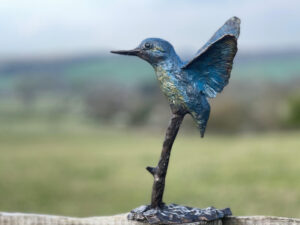
An aged bronze finish presents deep, rich tones, browns, umbers and subtle highlights that suggest a surface shaped over time. Even when newly made, it carries a sense of history. In garden and architectural contexts, aged bronze integrates naturally with stone, timber and planting. It does not compete with its setting; it grounds it. For large garden sculpture this is particularly effective, as the depth of tone defines form without relying on sharp contrast, letting a piece settle comfortably into expansive space.
Verdigris and environmental response
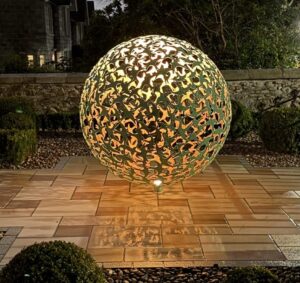
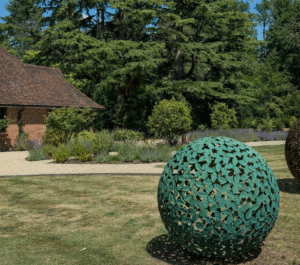
By contrast, a verdigris bronze sculpture introduces lighter, more varied tones, often the greens and blues associated with natural oxidation, applied intentionally during creation. Verdigris surfaces respond more visibly to changing light, so in outdoor settings the sculpture can appear to shift subtly through the day. That quality suits public art and commercial sculpture, where visual engagement plays a real part in how a space is experienced.
Choosing a finish for a commission? We prepare samples and references so you can see the exact patina before we make it. Speak to the studio.
Durability and longevity
Both aged and verdigris finishes contribute to the longevity of outdoor bronze sculpture, because the patina acts as a protective layer that shields the metal beneath from corrosion. Environmental factors continue to influence the surface over time, but rather than degrading, the sculpture develops further character. That is a fundamental distinction between bronze and many other materials: change is not a flaw, it is part of the appeal. For international projects, where climates vary, this resilience matters, whether a piece stands in a coastal setting, an urban centre or a private estate. A different route to a weathered look, using other metals, is covered in our post on oxidised steel and zinc.
The role of finish in commissioned work
When commissioning a sculpture, the choice of finish is tied closely to context. A piece for a contemporary architectural setting may benefit from the clarity of verdigris, while one intended for a historic landscape often aligns more naturally with aged bronze. In practice this decision is made early, frequently in collaboration with the architect and client, using samples and references so the final finish matches the wider vision. A studio working on international commissions will weigh not only aesthetic preference but how the finish will behave in local conditions over time. The full process is set out in our guide to commissioning a sculpture.
Scale and surface interaction
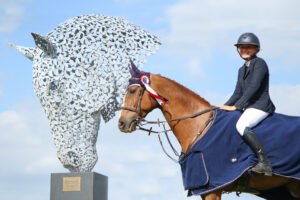
As a sculpture grows, surface treatment matters more. In large-scale work, subtle variation in patina influences how form is read from different distances. A completely uniform finish can look flat across a wide space, while a more nuanced surface enhances depth and dimension. In monumental sculpture, where visibility and impact must be balanced, the relationship between scale and surface becomes a central consideration in the making of cast bronze for both private and public settings.
British craftsmanship in an international context
There is growing demand for British sculptural expertise in global markets, particularly for high-end residential developments, hotels and public spaces. Part of that appeal is a deep understanding of material, including the careful application of finishes that ensure both immediate impact and long-term performance. For clients commissioning internationally, it offers confidence that a sculpture will meet aesthetic expectations and continue to evolve in a way that enhances its environment.
How Charles Elliott Sculpture helps
Every finish we apply is chosen for the piece and its setting, developed with samples and references so there are no surprises, and made to protect as well as to please. As a studio that takes each commission from concept through casting, patination and installation, we make sure the surface reads exactly as intended on day one and ages beautifully for decades.
If you are commissioning a bronze sculpture and want to get the finish right, we would welcome a conversation.
Make a commission enquiry | Discuss a trade or public project
Frequently asked questions
What is the difference between aged bronze and verdigris? Aged bronze gives deep browns and umbers with a sense of history and solidity. Verdigris gives lighter greens and blues that respond more dynamically to light. Both are created deliberately through patination.
Does a bronze patina protect the sculpture? Yes. The patina bonds with the metal and acts as a protective layer that helps shield the bronze from corrosion, which is part of why bronze endures so well outdoors.
Will the finish change over time? Yes, and that is intended. Environmental exposure continues to develop the surface, adding character rather than diminishing it, while the form stays unchanged.
Can I see the finish before it is made? Yes. We prepare samples and references during the design stage so you can approve the exact patina before fabrication.
Written by Charles Elliott, founder and sculptor. For advice on finishes for a specific piece, contact the studio.
Thinking about a bronze sculpture of your own?
Every piece leaves one studio. Designed, cast or hand-fabricated in silicon bronze, patinated and installed by the people who made it. Work ranges from tabletop pieces to landmark sculpture at fifteen metres and beyond.
See how a bronze sculpture is made, what it costs and how long it takes on our bronze sculpture page.
Explore bronze sculptureBook a call with CharlesOr speak to the studio on +44 (0) 1494 758 896