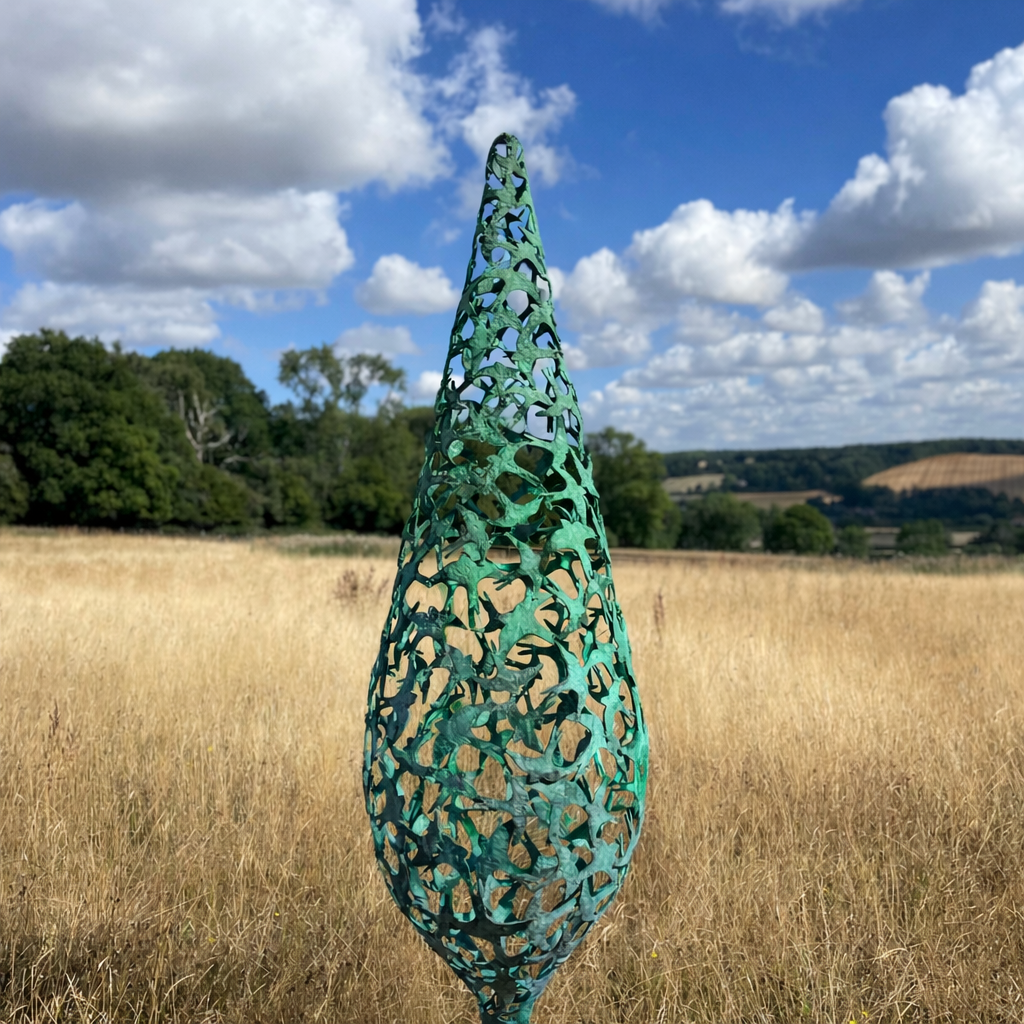
Outdoor sculpture exists at the intersection of art, environment, and time. Unlike works displayed in controlled interior spaces, sculptures placed outdoors must respond to fluctuating weather conditions, atmospheric pollutants, and the slow but inevitable processes of material change. Among the most compelling materials used in this context are oxidised steel and zinc, both valued not only for their structural properties but for the evolving surfaces they develop over time.
This article explores the role of oxidised steel and zinc in outdoor sculpture, examining their physical behaviour, aesthetic qualities, and long-term performance. It aims to provide a grounded understanding of how these materials function in public and private outdoor settings, and why they remain widely used by sculptors, architects, and designers.
Understanding Oxidation as a Creative Process
Oxidation is often thought of in purely technical or even negative terms, associated with corrosion or degradation. In sculpture, however, oxidation can be an intentional and controlled process that contributes directly to the visual identity of a piece.
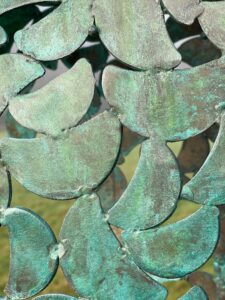
For metals such as steel and zinc, oxidation occurs when the surface reacts with oxygen, moisture, and other environmental elements. This interaction produces a patina, a thin layer that alters both the colour and texture of the material.
Rather than resisting this process entirely, many artists incorporate it into their work. The resulting surfaces are dynamic rather than static, shifting subtly over time and embedding the sculpture more deeply within its surroundings.
Oxidised Steel: Strength and Surface Evolution
Material Characteristics
Steel is widely used in sculpture for its strength, versatility, and scalability. In outdoor contexts, a specific type of weathering steel is often preferred. This material is designed to form a stable, rust-like appearance after exposure to the elements.
Unlike untreated steel, which can corrode continuously, weathering steel develops a protective oxide layer. This surface reduces further corrosion, allowing the material to maintain structural integrity while displaying a rich, textured finish.
Aesthetic Qualities
The visual appeal of oxidised steel lies in its depth and variation. Its surface typically ranges from warm orange and amber tones to deeper browns and purples, depending on environmental conditions and exposure time.
This evolving patina offers several advantages:
- Integration with landscape: The earthy tones of oxidised steel sit naturally within both rural and urban environments.
- Surface complexity: The irregularity of oxidation creates a sense of movement and organic development.
- Temporal dimension: The sculpture changes subtly over months and years, reinforcing a sense of permanence and continuity.
These qualities make oxidised steel particularly suited to large-scale works and public installations, where visual impact and durability are equally important.
Environmental Considerations
While weathering steel is designed for outdoor use, its performance depends on context. Environments with consistent wetness, such as coastal areas with high salt exposure, can disrupt the formation of the protective layer, leading to ongoing corrosion.
Proper design considerations, such as drainage, airflow, and positioning, are essential to ensure long-term stability.
Zinc: Subtlety, Protection, and Patina
Material Characteristics
Zinc occupies a different position within outdoor sculpture. It is less commonly used as a primary structural material but plays a significant role as a surface or coating, particularly through galvanisation.
Galvanised steel, steel coated with a layer of zinc, benefits from zinc’s corrosion-resistant properties. The zinc acts as a sacrificial layer, protecting the underlying steel from environmental damage.
Aesthetic Qualities
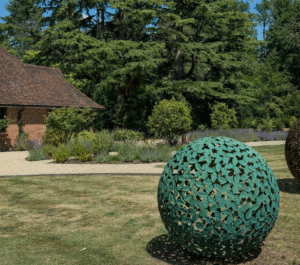
Zinc develops a patina that differs markedly from oxidised steel. Rather than warm, rust-like tones, zinc surfaces tend toward cooler greys and soft blue hues. Over time, exposure to air and moisture produces a matte, slightly chalky finish.
This understated appearance can be advantageous in several contexts:
- Minimalist or contemporary designs: Zinc’s muted tones complement clean lines and restrained forms.
- Architectural integration: It aligns well with modern materials such as glass, concrete, and aluminium.
- Surface uniformity: Compared to oxidised steel, zinc patinas are often more consistent and less visually dramatic.
The result is a material that supports rather than dominates the sculptural form.
Durability and Maintenance
Zinc is highly resistant to corrosion, particularly in urban and temperate environments. Its protective qualities make it a practical choice for sculptures that require longevity with minimal intervention.
However, like all materials, zinc responds to its environment. Pollutants, moisture levels, and physical wear can influence the appearance of its patina over time.
Comparing Oxidised Steel and Zinc in Practice
Although both materials rely on oxidation, they serve different artistic and functional purposes.
Oxidised steel tends to be chosen for its expressive surface and structural strength. It is often used in large-scale sculptures where the material itself is a central visual element.
Zinc, by contrast, is frequently employed for its protective qualities and subtle finish. It may be used as a coating or as part of a composite material system rather than as the primary visual focus.
Key differences include:
- Colour palette:
- Oxidised steel: warm, earthy tones
- Zinc: cool, neutral greys
- Surface behaviour:
- Oxidised steel: varied, textured, evolving
- Zinc: smoother, more uniform
- Role in construction:
- Oxidised steel: structural and aesthetic
- Zinc: protective and complementary
Understanding these distinctions helps inform material selection based on both artistic intent and environmental context.
Interaction with Environment and Time
Outdoor sculpture is inherently tied to its surroundings. Materials do not exist in isolation; they respond continuously to light, temperature, moisture, and human interaction.
Both oxidised steel and zinc are particularly responsive in this regard:
- Light: Changes in sunlight alter the perception of surface colour and texture.
- Moisture: Rain and humidity influence the rate and character of oxidation.
- Air quality: Pollutants can accelerate or modify patina development.
This responsiveness contributes to a key aspect of outdoor sculpture: its capacity to evolve. Rather than remaining fixed, the work participates in an ongoing dialogue with its environment.
Structural and Design Considerations
When working with oxidised steel or zinc, several technical factors must be addressed to ensure durability and safety:
- Drainage: Preventing water accumulation is essential, particularly for steel.
- Fixings and joints: Connections must accommodate expansion, contraction, and material differences.
- Surface runoff: Oxidised steel can produce staining on adjacent materials, which should be considered in placement.
These practical concerns are not separate from the artistic process; they shape how a sculpture is conceived and realised.
Context Within Broader Sculptural Practice
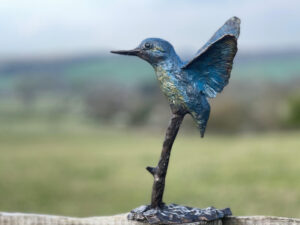
The use of oxidised steel and zinc sits within a wider tradition of metal sculpture. Materials such as bronze, for example, offer different aesthetic and structural possibilities, often characterised by smoother finishes and more controlled patination.
For readers interested in how these materials compare, exploring related topics such as Bronze Sculpture can provide useful context.
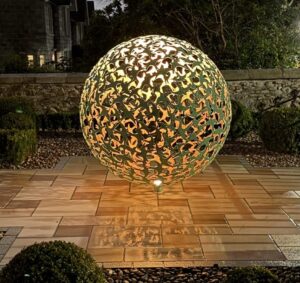
Similarly, form plays a critical role alongside material. Geometric works, including Sphere Sculptures, interact with light and surface in distinct ways, highlighting the effects of oxidation and patina.
In public and architectural settings, material choice becomes even more significant. Sculptures designed for shared spaces must balance visual impact with durability and safety, considerations central to Commercial / Public Art practice.
Longevity and Perception
One of the defining characteristics of oxidised steel and zinc is their ability to age visibly. This ageing process is not a flaw but a feature, contributing to the perception of authenticity and permanence.
Over time, the surface of a sculpture becomes a record of its exposure:
- Variations in colour reflect seasonal changes.
- Subtle marks indicate environmental interaction.
- Patina layers build gradually, adding depth and character.
For viewers, this evolving surface can create a stronger connection to the work. It emphasises the passage of time and situates the sculpture within a broader temporal context.
Conclusion
Oxidised steel and zinc offer distinct yet complementary possibilities for outdoor sculpture. Both materials embrace oxidation not as a problem to be eliminated but as a process to be understood and integrated.
Oxidised steel provides strength and expressive surface variation, making it well suited to bold, large-scale works. Zinc, with its protective qualities and understated aesthetic, supports more restrained or architectural approaches.
Together, they illustrate a broader principle within sculpture: that material behaviour is not separate from artistic intent. By working with, rather than against, natural processes, artists can create works that are not only durable but deeply connected to their environment.
In outdoor settings, where change is constant, this approach allows sculpture to remain relevant and engaging over time, shaped as much by the elements as by the hand of the artist.