Bronze vs Steel Sculptures for Outdoor Public Art
(Choosing the Right Material for Permanent Installations)
When commissioning outdoor public art, one of the earliest and most important decisions is material. For permanent installations, the choice is most often between bronze and steel — two materials with very different characteristics, aesthetics, and long-term implications.
At Charles Elliott Sculpture, we design and create large-scale bronze and steel public art sculptures for developers, councils, institutions, and corporate clients across the UK and internationally. Our role is not to favour one material over another, but to ensure the material selected is appropriate for the site, intent, and lifespan of the project.
If you are weighing material options for a public art commission, you are welcome to
call +44 (0)1494 758896 or email the studio for early-stage advice.
Why Material Choice Matters in Public Art
Outdoor public art is exposed to:
Weather and temperature variation
Public interaction and footfall
Long-term visual scrutiny
Unlike interior artwork, a public sculpture must perform structurally and aesthetically for decades. Material choice affects:
Durability and maintenance
Visual presence and tone
Long-term cost of ownership
Public perception and interaction
This is why bronze and steel are the two materials most often specified for serious, permanent public art.
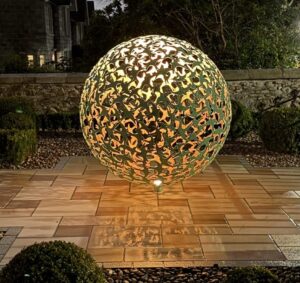
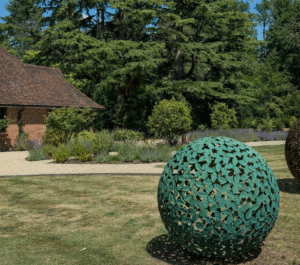
Bronze Sculpture for Outdoor Public Art
Bronze has been used for public sculpture for centuries and remains a preferred material for many landmark commissions.
Key characteristics of bronze public art:
Exceptional longevity and durability
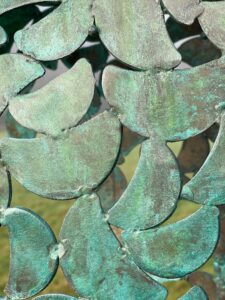
Develops a natural patina over time
Resistant to corrosion and weathering
Requires minimal long-term maintenance
Bronze is particularly well suited to:
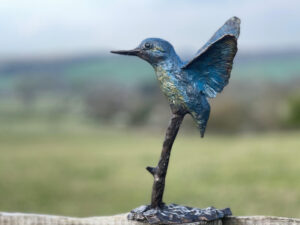
Figurative sculpture
Memorial and commemorative works
Landmark civic art
Projects where heritage, gravitas, and permanence are important
From a planning and asset perspective, bronze is often viewed as a low-risk, long-life material, making it attractive to councils and institutions.
Steel Sculpture for Outdoor Public Art
Steel offers a very different visual language and is widely used in contemporary public art and large-scale installations.
Key characteristics of steel public art:
Strong architectural presence
Capable of bold, large-scale forms
Integrates naturally with modern buildings
Suitable for abstract or structural designs
Steel is particularly effective for:
Contemporary developments
Large, site-specific installations
Sculptures integrated with architecture or landscape
Projects where scale and visibility are priorities
Different finishes and treatments can be specified depending on exposure and desired appearance.
Visual Impact: Bronze vs Steel
The visual impact of a sculpture is closely tied to material choice.
Bronze tends to:
Read as calm, established, and enduring
Sit comfortably within historic or natural settings
Age gradually, often enhancing character
Steel tends to:
Feel contemporary and assertive
Stand out strongly within urban environments
Emphasise form, scale, and structure
Neither is inherently “better” — the right choice depends on context and intent.
Maintenance & Long-Term Considerations
Material choice also affects long-term management.
Bronze sculptures typically require:
Minimal intervention
Occasional inspection
Natural patination over time
Steel sculptures may require:
Periodic inspection depending on finish
Consideration of surface treatment
Clear specification at design stage
We advise clients on maintenance expectations from the outset so there are no surprises later in the lifecycle of the work.
Planning, Safety & Public Interaction
Both bronze and steel sculptures must meet:
Structural safety requirements
Fixing and foundation standards
Public interaction considerations
At development and civic scale, these considerations are resolved during the design and engineering phase, ensuring compliance with planning and public safety expectations.
Commissioning Process: From Material Choice to Installation
Material selection is addressed early in the commissioning process.
Initial discussions consider:
Site exposure and environment
Desired visual impact
Budget range
Long-term stewardship
From there, the sculpture is designed, engineered, fabricated in bronze or steel, and installed in coordination with groundworks and construction teams.
Typical timelines for outdoor public art range from 6 to 18 months, depending on scale and approvals.
Budgets & Material Selection
While each project is unique, material choice does influence cost and scope.
Bronze public art sculptures are often selected for long-term value and minimal maintenance
Steel public art sculptures can allow for greater scale and structural expression
Budgets for permanent outdoor public art typically range from £25,000 to £2m+, depending on material, scale, and complexity.
Working Internationally
Charles Elliott Sculpture works with clients across the UK and internationally, supporting outdoor public art projects in urban centres, developments, and public spaces.
Whether a project is located in London, New York, or further afield, we provide consistent advice and delivery regardless of location.
Discussing Material Choice for a Public Art Commission
If you are considering bronze or steel for an outdoor public art sculpture, an early conversation can help clarify suitability, cost, and long-term implications.
You are welcome to
call +44 (0)1494 758896 or
email the studio
to discuss your project in confidence.
Thinking about a bronze sculpture of your own?
Every piece leaves one studio. Designed, cast or hand-fabricated in silicon bronze, patinated and installed by the people who made it. Work ranges from tabletop pieces to landmark sculpture at fifteen metres and beyond.
See how a bronze sculpture is made, what it costs and how long it takes on our bronze sculpture page.
Explore bronze sculptureBook a call with CharlesOr speak to the studio on +44 (0) 1494 758 896